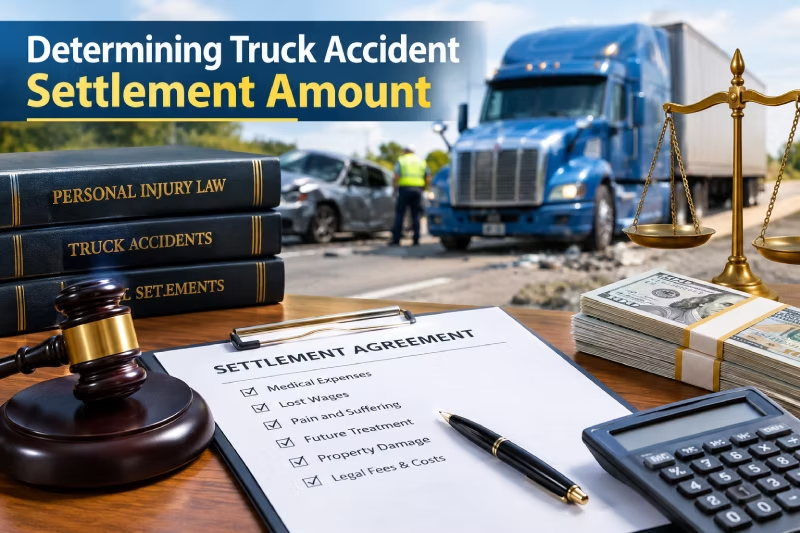
A serious truck crash can leave an injured person facing hospital bills, missed paychecks, vehicle damage, long-term treatment, and major changes to everyday life. Determining truck accident settlement amount is therefore not as simple as adding medical bills and asking an insurance company for a certain dollar figure.
The value of a claim depends on the evidence of fault, the severity and duration of the injuries, financial losses, future medical needs, lost earning capacity, pain and suffering, insurance coverage, and the laws of the state where the crash occurred.
A settlement is usually a negotiated payment made to resolve a legal claim without taking the case through a full trial. There is no universal truck accident settlement calculator that can reliably tell an injured person what a case is worth.
Two crashes that look similar from the outside can produce very different settlements.
For example, suppose two motorists are injured in separate collisions involving tractor-trailers. One suffers a broken arm and returns to work within several months. The other suffers a spinal injury that requires surgery, rehabilitation, and ongoing treatment. Even if the property damage looks similar, the financial and personal losses may be very different.
This guide explains how lawyers, insurers, and opposing parties generally examine these claims, what damages may be available, what evidence can change the value of a case, and why an early settlement offer may not reflect the full extent of an injury.
What Determines the Value of a Truck Accident Claim?
The value of a commercial truck accident claim usually depends on several connected factors rather than one mathematical formula.
The first question is who was legally responsible for the crash. A truck driver may be responsible because of negligent driving, but the investigation can also raise questions involving the trucking company, a maintenance provider, a shipper, a manufacturer, or another party.
The second question is what the collision caused.
A claimant generally needs evidence connecting the crash to specific physical, financial, and personal losses. Medical records, employment records, photographs, witness statements, crash reports, vehicle data, expert opinions, and trucking records can all become important.
The third question is how much insurance or other financial coverage is available.
A claim against a commercial carrier can involve more than one insurance policy or potentially more than one legally responsible party. The actual coverage available depends on the circumstances, the entities involved, applicable federal and state requirements, and the insurance contracts.
There Is No Fixed Average Settlement
People often search for an “average truck accident settlement” because they want a starting point.
That number can be misleading.
Settlement values are affected by factors that cannot be captured by a national average. A claim involving temporary injuries may be resolved for a very different amount from one involving permanent disability, future surgery, or wrongful death.
An online settlement figure also does not establish what a particular case is worth.
A useful evaluation instead asks:
- What injuries occurred?
- What medical treatment was necessary?
- Is additional treatment expected?
- Did the person miss work?
- Has earning capacity been reduced?
- Was the person permanently impaired?
- Who caused the collision?
- Is comparative fault disputed?
- What evidence supports liability?
- What insurance coverage is available?
- Which state law applies?
- Has the full medical picture become clear?
These questions provide a much more useful framework than relying on a single advertised settlement amount.
The Main Categories of Damages
Truck accident damages generally fall into two broad groups: economic damages and non-economic damages. Some cases may also involve punitive damages, but those are governed by specific legal standards and are not automatically available simply because a truck crash was serious.
The exact categories and rules vary by state.
Economic Damages
Economic damages are losses that can generally be supported with financial records or other evidence showing a measurable monetary impact.
They can include:
- Emergency medical treatment
- Hospital expenses
- Surgery
- Prescription medication
- Physical therapy
- Rehabilitation
- Diagnostic testing
- Medical equipment
- Future medical care
- Lost wages
- Lost employment benefits
- Reduced earning capacity
- Property damage
- Certain out-of-pocket expenses
Medical expenses can become especially significant after a major commercial truck crash.
The Centers for Medicare & Medicaid Services reported that U.S. national health expenditures reached $5.3 trillion in 2024, with hospital expenditures reaching about $1.63 trillion. Those national figures do not establish what an individual accident victim's treatment should cost, but they help explain why serious medical care can create substantial financial losses.
For an individual claim, the important evidence is the person's actual treatment and documented medical needs.
Consider a driver who spends three days in a hospital after a truck collision, undergoes surgery, attends physical therapy for six months, and later needs additional treatment. The medical component of the claim should not necessarily stop with the first hospital invoice. If qualified medical evidence shows that future treatment is reasonably expected, those future losses may also become part of the damages analysis.
Future Medical Expenses
Future medical care is one reason an early settlement can be difficult to evaluate.
An injured person may initially believe that recovery will take only a few weeks. Months later, doctors may determine that the person needs another surgery, additional therapy, injections, assistive equipment, or continuing treatment.
That is why a careful case evaluation considers the long-term medical picture instead of simply totaling bills received so far.
A future-care assessment may involve physicians, rehabilitation specialists, life-care planners, economists, or other qualified professionals depending on the injury and complexity of the claim.
For example, a traumatic spinal injury may create medical needs extending years into the future. A settlement that only accounts for treatment already received could leave a major part of the person's actual loss unaddressed.
Lost Wages and Lost Earning Capacity
An injured person may lose income while recovering.
The basic calculation may include wages that would have been earned during missed work. Evidence can include:
- Pay stubs
- Tax returns
- Employer records
- Employment contracts
- Timekeeping records
- Benefit statements
- Business records for self-employed workers
But the analysis can become more complicated when the injury affects the person's future ability to earn.
Lost earning capacity is different from simply calculating the paychecks already missed.
Imagine a commercial driver earning $75,000 per year before a collision. If a permanent injury prevents that person from returning to commercial driving and limits future employment options, the potential loss may extend far beyond several months of missed wages.
The analysis may consider the person's age, education, work history, skills, expected career path, physical restrictions, and available employment alternatives.
Economic experts may be used in more complex cases to estimate the financial effect of a long-term reduction in earning ability.
Why Truck Accident Claims Require a Deeper Investigation
A commercial truck collision can involve evidence that is not normally available in a basic passenger-vehicle accident.
Federal trucking regulations create records and safety requirements that may become relevant to the investigation.
For example, electronic logging devices are designed to record information connected to a commercial driver's hours of service. FMCSA explains that an ELD can automatically record information such as engine power status, vehicle motion, miles driven, engine hours, driver identification, vehicle identification, and duty status.
That information can become important when a case involves an allegation that a driver was operating while fatigued or exceeded applicable hours-of-service limits.
FMCSA also states that motor carriers generally must retain ELD record-of-duty-status data and backup data for six months.
This creates an important practical issue: evidence can have a limited retention period.
An attorney investigating a serious collision may therefore consider preservation requests early rather than waiting until months have passed.
Other potentially relevant evidence can include:
- Driver qualification records
- Hours-of-service records
- ELD data
- Inspection records
- Maintenance records
- Repair invoices
- Dispatch records
- Bills of lading
- GPS information
- Dash-camera footage
- Forward-facing camera footage
- Driver cellphone records where legally obtainable
- Drug and alcohol testing information
- Accident reports
- Photographs and videos
- Witness statements
The FMCSA Drug and Alcohol Clearinghouse is another example of the specialized records that can exist in commercial trucking cases. The Clearinghouse provides authorized employers and government agencies with information concerning CDL and CLP holders' covered drug and alcohol program violations.
Not every record will be relevant in every accident. Access to certain records can also depend on privacy rules, discovery procedures, consent requirements, subpoenas, and applicable law.
Liability Can Change the Settlement Analysis
A truck accident claim is not only about the extent of the injury.
It is also about proving liability.
A claimant may need to establish that another party owed a legal duty, breached that duty, and caused the injuries or losses being claimed. State law determines many of the rules governing negligence and damages.
In some cases, the truck driver may be accused of:
- Speeding
- Following too closely
- Distracted driving
- Unsafe lane changes
- Fatigued driving
- Improper loading
- Failure to inspect
- Unsafe backing
- Violating traffic regulations
But responsibility may extend beyond the driver.
A trucking company may face allegations involving hiring, training, supervision, scheduling, maintenance, or other conduct. A maintenance company may become relevant if defective maintenance contributed to the collision. A manufacturer may become involved when a defective component is alleged to have caused or contributed to the crash.
The evidence determines which theories are supported.
Comparative Fault Can Reduce Recovery
Another major issue is whether the injured person is alleged to have contributed to the collision or to the resulting injuries.
Many states use some form of comparative-fault system, but the specific rules differ substantially from state to state.
For example, suppose a jury determines that another party was primarily responsible for a crash but also finds that the injured person bears some percentage of responsibility. Depending on the applicable state's law, the person's recovery may be reduced accordingly, and in some jurisdictions a particular level of fault can have additional consequences.
This is one reason a settlement cannot be accurately valued by looking only at medical bills.
The parties may disagree about both liability and damages.
A strong medical claim can still face serious challenges if the evidence does not clearly establish who caused the collision. Conversely, evidence showing a significant trucking violation or other negligence may materially affect negotiations.
The complete record matters.
What an Insurance Company May Consider
An insurance company evaluating a truck accident claim may review evidence concerning liability, injuries, treatment, lost income, property damage, and other claimed losses.
An insurer may also examine whether the medical treatment is consistent with the reported injuries and whether the available documentation supports future damages.
This does not mean the insurer's evaluation automatically represents the fair value of the claim.
The insurer has its own financial and legal interests, while the injured person's interests may be very different.
An early offer can sometimes arrive before the full extent of an injury is known.
For example, an insurer might make an offer shortly after the collision while the claimant is still receiving treatment. Accepting a settlement generally means giving up the right to pursue additional compensation for the claims released by the agreement. The exact effect depends on the settlement documents and applicable law.
That is why injured people should understand what rights they are releasing before signing a settlement agreement.
A Settlement Is More Than the Gross Dollar Amount
Even when parties agree on a settlement figure, the amount the injured person ultimately keeps can be different from the headline number.
Potential deductions or obligations may include:
- Attorney fees
- Litigation expenses
- Medical liens
- Health insurance reimbursement claims
- Certain government reimbursement interests
- Case-related costs
- Taxes in circumstances where settlement proceeds are taxable
Tax treatment depends on the nature of the payment.
The IRS states that compensatory damages for personal physical injury or physical sickness are generally excluded from federal gross income, subject to statutory exceptions and the particular facts of the payment. The IRS also explains that punitive damages and certain other categories can receive different tax treatment.
This is another reason a claimant should not judge a settlement solely by its gross amount.
Research/reference links of the article:
- Google Search Central — Creating Helpful, Reliable, People-First Content
- Google Search Central — AI Features and Your Website
- FMCSA — Electronic Logging Devices
- FMCSA — ELD Record Retention Guidance
- FMCSA Drug & Alcohol Clearinghouse
- CMS — National Health Expenditure Fact Sheet
- IRS — Tax Implications of Settlements and Judgments
How Medical Evidence Affects Settlement Value
Medical evidence is often one of the most important parts of a truck accident claim. Insurance companies, defense attorneys, and courts generally look for a clear connection between the collision, the injuries, the treatment received, and the losses being claimed.
A diagnosis by itself may not tell the full story.
The evaluation can involve the seriousness of the injury, the treatment required, the length of recovery, whether symptoms continue, whether additional treatment is expected, and whether the injury creates permanent restrictions.
For example, a fractured wrist may require only conservative treatment in one case but surgery and months of rehabilitation in another. The diagnosis may sound similar, but the actual losses can be very different.
Medical Records Tell the Story of the Injury
Important medical evidence may include:
- Emergency-room records
- Ambulance records
- Diagnostic imaging
- Physician notes
- Surgical records
- Physical therapy records
- Rehabilitation records
- Prescription records
- Specialist evaluations
- Follow-up appointments
- Work restrictions
- Future-treatment recommendations
Consistency also matters.
If someone reports severe pain immediately after a collision and continues receiving documented treatment, that evidence may help establish the progression of the injury. Gaps in treatment can raise questions, although there can be many legitimate reasons for delayed or interrupted care, including cost, lack of transportation, insurance problems, or access to specialists.
The important issue is not simply whether there was a gap. It is why the gap occurred and what the medical evidence shows.
Pre-Existing Conditions Do Not Automatically End a Claim
Truck accident victims sometimes worry that an insurance company will argue that an existing medical condition prevents them from recovering damages.
The analysis can be more complicated.
A person may have had back pain, arthritis, a prior surgery, or another medical condition before the collision. If the truck crash aggravated that condition or caused a new injury, medical evidence may be needed to distinguish the pre-existing condition from the effects of the collision.
For example, someone may have occasional lower-back discomfort before a crash but later develop persistent neurological symptoms after being struck by a tractor-trailer.
The relevant question may become whether the collision caused a new injury or materially worsened the previous condition.
A treating physician or other qualified medical professional may be asked to address causation, prognosis, and future treatment.
Pain and Suffering Can Be a Major Part of the Claim
Economic losses are usually easier to document because they can be connected to bills, wage records, invoices, and other financial evidence.
Pain and suffering are different.
They involve the physical discomfort, emotional effects, limitations, and reduced quality of life associated with the injury.
Depending on applicable state law, non-economic damages can potentially include:
- Physical pain
- Emotional distress
- Loss of enjoyment of life
- Physical limitations
- Disfigurement
- Scarring
- Sleep problems
- Loss of independence
- Reduced ability to participate in hobbies
- Loss of companionship in appropriate cases
There is no universally accepted formula that determines the value of these losses.
Why There Is No Reliable Pain-and-Suffering Multiplier
People sometimes hear that an injury settlement can be calculated by multiplying medical expenses by two, three, or another number.
That is not a dependable legal formula.
Suppose two people each incur $50,000 in medical expenses.
One may recover fully after several months and return to the same job and activities. The other may develop permanent limitations that affect employment, family responsibilities, recreation, and daily living.
The medical bills are identical, but the broader consequences are not.
A settlement evaluation therefore needs to consider the actual impact of the injury, not simply apply a predetermined multiplier.
Evidence can include medical records, photographs, testimony from family members, work restrictions, rehabilitation records, journals, and other documentation showing how the injury changed daily life.
Permanent Injuries Can Change the Entire Valuation
A temporary injury and a permanent injury are evaluated very differently.
When doctors determine that an injury is permanent, the analysis can extend far into the future.
A permanent injury might affect:
- Ability to work
- Ability to drive
- Ability to lift
- Mobility
- Personal care
- Family responsibilities
- Recreation
- Social activities
- Future medical needs
- Earning capacity
A catastrophic truck crash may involve traumatic brain injuries, spinal cord injuries, amputations, severe burns, multiple fractures, or other life-changing conditions.
The settlement analysis in such cases can require multiple experts.
A life-care planner may estimate future medical and support needs. A vocational expert may evaluate how the injury affects employment. An economist may estimate future financial losses.
The purpose is not to create an arbitrary large number.
The purpose is to document losses that may continue long after the settlement is completed.
Example: Permanent Work Restrictions
Consider a 42-year-old commercial driver who suffers a serious shoulder and spinal injury in a collision.
Before the accident, the driver earns $80,000 annually. After treatment, the person can perform some forms of work but can no longer safely perform the physical duties required for commercial driving.
The claim may involve more than the wages already missed.
It could require analysis of:
- Past lost income.
- Reduced future earning capacity.
- Medical treatment already received.
- Reasonably expected future treatment.
- Physical pain.
- Loss of normal activities.
- Permanent restrictions.
- Other legally recoverable losses.
The actual calculation would depend on the evidence and the applicable state law.
Future Losses Must Be Considered Carefully
One of the biggest valuation mistakes is looking only at losses that have already occurred.
A serious injury can produce expenses and income losses for years.
Future losses may include:
- Continuing medical treatment
- Rehabilitation
- Medication
- Assistive devices
- Home modifications
- Transportation needs
- Future surgeries
- Lost future income
- Reduced earning capacity
- Long-term personal assistance
The more significant the future losses, the more important reliable expert evidence becomes.
For example, if a physician recommends another surgery in two years, simply ignoring that recommendation because the surgery has not happened yet could produce an incomplete assessment.
At the same time, future damages should not be based on speculation.
The evidence should establish that the future loss is sufficiently supported under the applicable legal standard.
Trucking Company Liability Can Affect the Claim
A truck accident investigation may identify several potentially responsible parties.
The driver is only one possible defendant.
Depending on the facts, a case could involve:
- A motor carrier
- A trucking company
- A freight broker
- A shipper
- A maintenance company
- A parts manufacturer
- A trailer owner
- Another driver
- A property owner
- Other entities connected to the crash
The legal relationship between the driver and company can also matter.
For example, a trucking company may be accused of negligent hiring, training, supervision, or retention. In another case, the evidence may concern vehicle maintenance or a defective component.
These theories should not simply be assumed because a commercial truck was involved.
They must be supported by evidence.
Federal Trucking Rules Can Become Important Evidence
The Federal Motor Carrier Safety Administration regulates many aspects of interstate commercial motor carrier operations.
The Federal Motor Carrier Safety Regulations address areas such as driver qualification, hours of service, vehicle inspection, maintenance, and other safety requirements.
For example, FMCSA's hours-of-service rules establish limits and requirements governing how long certain commercial drivers may operate and when they must take required rest periods.
A violation does not automatically answer every question in a personal injury case.
But where a regulation is relevant to the facts, evidence of compliance or noncompliance may become important to the liability analysis.
Maintenance Records May Reveal Another Cause
A truck can travel tens of thousands of miles in a year.
That makes proper inspection and maintenance particularly important.
Evidence may include:
- Brake inspection records
- Tire records
- Repair invoices
- Preventive maintenance schedules
- Inspection reports
- Defect reports
- Parts replacement records
- Service-provider records
Imagine a collision in which investigators find evidence of a serious brake defect.
The case may then involve questions that are different from a simple driver-error claim.
Who knew about the defect?
When was the vehicle last inspected?
Was a repair recommended?
Was the repair completed?
Was the vehicle placed back into service?
The answers can affect liability and the parties involved.
Evidence From the Crash Scene Can Strengthen a Claim
Truck accident scenes can contain evidence that disappears quickly.
Vehicles may be repaired or destroyed. Skid marks can disappear. Debris can be removed. Road conditions can change. Witnesses can become difficult to locate.
Photographs and videos taken soon after the collision can therefore be valuable.
Useful evidence may show:
- Vehicle positions
- Damage patterns
- Road conditions
- Traffic signs
- Lane markings
- Tire marks
- Debris
- Visibility
- Weather conditions
- Nearby businesses
- Traffic signals
- Truck cargo
- Trailer condition
Dash-camera footage can be especially useful when available.
Some commercial vehicles also have event-recording systems or cameras that may capture information before and during a collision.
Because electronic evidence can have retention limitations, early preservation efforts may be important.
Accident Reconstruction Can Help Explain What Happened
A serious collision may involve competing versions of events.
One driver might claim that the truck changed lanes unexpectedly.
The truck driver might claim that the passenger vehicle entered the truck's lane.
Witnesses may remember different details.
Physical evidence can sometimes help reconstruct the sequence.
Accident reconstruction professionals may examine:
- Vehicle damage
- Skid marks
- Event data
- Vehicle positions
- Road geometry
- Vehicle speeds
- Timing
- Visibility
- Driver reaction opportunities
The role of an expert is not to guarantee a particular result.
Rather, expert analysis can provide evidence-based opinions about how the collision may have occurred, subject to the applicable rules of evidence.
Insurance Coverage Can Put a Practical Limit on Recovery
A settlement can only be collected from available sources of compensation.
Commercial trucking insurance can be more complicated than ordinary personal auto insurance.
Federal regulations establish minimum financial responsibility requirements for certain motor carriers, but the applicable amount depends on factors such as the type of operation and cargo.
FMCSA explains that minimum financial responsibility requirements can vary significantly, including requirements applicable to different types of carriers and hazardous-material operations.
A claimant should therefore avoid assuming that every truck involved in a collision has the same insurance coverage.
Potential coverage may involve:
- Primary commercial auto insurance
- Excess coverage
- Umbrella policies
- Additional policies held by related entities
- Coverage connected to another responsible party
Coverage disputes can also arise.
An insurer may argue that a particular policy does not cover the claim or that another policy should respond first. The policy language and facts of the accident matter.
Why Policy Limits Matter
Suppose the evidence establishes substantial damages, but the available applicable insurance is limited.
The settlement discussion may then involve questions about:
- Policy limits
- Multiple policies
- Multiple defendants
- Additional insureds
- Excess coverage
- Other available assets
- Applicable coverage exclusions
This is one reason liability investigation and insurance investigation often occur together.
A lawyer evaluating a serious claim generally needs to understand not only how much the injuries are worth, but also where the money could legally come from.
Settlement Value and Trial Value Are Not Identical
A case may have a certain potential value if a jury ultimately awards damages, but that does not mean an insurer will offer the same amount to settle before trial.
Settlement involves uncertainty.
Both sides consider the strengths and weaknesses of the evidence, potential litigation costs, delay, legal defenses, witness credibility, expert testimony, and the possibility of an unpredictable verdict.
For example, imagine that both sides agree that the claimant suffered $200,000 in medical losses but strongly disagree about who caused the collision.
The damages may be relatively clear while liability remains uncertain.
That uncertainty can substantially affect negotiations.
The opposite can also happen. Liability may be strongly supported, while the parties disagree about the long-term medical impact of the injury.
In that situation, future damages and medical causation may become the central dispute.
How Attorneys Build a Settlement Demand
A well-supported demand is more than a letter containing a large number.
It should explain why the claimant is legally entitled to compensation and provide evidence supporting the claimed losses.
Depending on the case, a demand package may include:
- Accident facts
- Liability evidence
- Police or crash reports
- Photographs
- Medical records
- Medical bills
- Physician opinions
- Wage documentation
- Employment records
- Future-treatment evidence
- Evidence of permanent impairment
- Evidence concerning pain and daily limitations
- Applicable insurance information
The presentation should make it easier for the opposing side to understand the evidence.
A demand unsupported by documentation is easier to challenge.
A well-organized claim gives the insurer a clear record to evaluate.
Example of a Stronger Valuation Approach
Consider a hypothetical claimant who has:
- $95,000 in documented medical expenses
- $35,000 in past lost wages
- A physician-supported need for future treatment
- Permanent lifting restrictions
- Continuing pain
- Reduced ability to perform the person's former occupation
Simply adding the first two numbers produces $130,000.
But that is not necessarily the complete claim.
The evaluation also needs to consider supported future medical losses, future earning-capacity losses, and non-economic damages, subject to the laws governing the case.
The point is important: a settlement value is not always equal to the total of existing bills.
Settlement Negotiations Can Involve Multiple Rounds
Truck accident negotiations often develop over time.
An insurer may make an initial offer. The claimant may reject it and provide additional evidence. The insurer may then increase its offer, dispute certain damages, or request additional information.
This process can continue through several rounds.
Negotiations may focus on:
- Liability
- Comparative fault
- Medical causation
- Treatment costs
- Future medical care
- Lost wages
- Earning capacity
- Pain and suffering
- Permanent impairment
- Insurance limits
- Evidence weaknesses
The numbers themselves are only one part of the negotiation.
The supporting evidence is often what determines whether a position is persuasive.
Why the First Settlement Offer May Not Be the Final Answer
An early settlement offer can be tempting, particularly when medical bills are arriving and the injured person is unable to work.
But accepting a settlement usually requires signing a release.
That release can have significant consequences.
Once a claim is released, the injured person may no longer be able to pursue additional compensation from the released parties for the claims covered by the agreement.
Consider a person who accepts an offer six weeks after a crash and later learns that surgery will be required.
Whether additional compensation is possible may depend heavily on what was signed.
This is why a claimant should understand the settlement agreement before accepting it.
State Law Can Change the Calculation
There is no single national formula for truck accident settlements.
Personal injury law is largely governed by state law, and states can differ on:
- Comparative negligence
- Statutes of limitation
- Damage caps
- Wrongful-death damages
- Medical liens
- Insurance requirements
- Evidence rules
- Prejudgment interest
- Punitive damages
- Government claims
- Settlement procedures
A truck collision that occurs in Texas can therefore raise different legal issues from a similar collision in California, Florida, New York, Ohio, or Nevada.
The location of the crash is important, but jurisdictional questions can sometimes become more complicated when multiple states, companies, or insurance policies are involved.
Anyone evaluating a real claim should identify the law that actually governs the case rather than relying on a generic national settlement estimate.
A Practical Example of the Full Valuation Process
Imagine a hypothetical 38-year-old worker is injured when a tractor-trailer rear-ends the worker's vehicle.
The person suffers a serious leg injury and a back injury.
The initial evidence shows that:
- The truck driver was operating the vehicle during the collision.
- The claimant required emergency treatment.
- Surgery was later performed.
- The claimant missed six months of work.
- Physical therapy continued for many months.
- A physician later imposed permanent lifting restrictions.
- The claimant cannot return to the previous physically demanding job.
The valuation process would not simply ask, “How much did the hospital charge?”
It would examine several layers.
Liability: What caused the rear-end collision? Is there evidence of distraction, fatigue, following too closely, speed, or another form of negligence?
Medical damages: What treatment has already occurred, and what treatment is reasonably expected?
Lost income: How much was lost during recovery?
Future earning capacity: Can the claimant return to the same occupation? If not, what financial effect is reasonably supported?
Non-economic losses: How have pain, physical limitations, and reduced activities affected the claimant?
Insurance: What policies and limits apply?
Comparative fault: Is there evidence that the claimant contributed to the collision or injuries?
Proof: Can each major part of the claim be supported with reliable evidence?
Only after these questions are examined can the parties begin to develop a meaningful settlement position.
What Can Lower the Value of a Truck Accident Claim?
Several issues can create challenges during negotiations.
Potential problems include:
- Weak evidence of liability
- Significant comparative-fault allegations
- Gaps in medical treatment
- Pre-existing conditions
- Limited medical documentation
- Failure to follow medical recommendations
- Lack of proof of lost income
- Disputes over future treatment
- Conflicting expert opinions
- Questions about whether an injury was caused by the crash
- Limited insurance coverage
- Failure to preserve important evidence
None of these automatically destroys a claim.
The effect depends on the facts.
For example, a treatment gap caused by lack of insurance is different from abandoning treatment without explanation. The surrounding evidence matters.
Likewise, having a pre-existing condition is not the same as having no accident-related injury.
What Can Strengthen the Valuation?
Strong claims often have consistent evidence connecting the collision to the losses being claimed.
Helpful evidence may include:
- Prompt medical evaluation
- Consistent treatment
- Clear diagnostic findings
- Physician-supported causation
- Detailed medical records
- Reliable employment documentation
- Strong accident-scene evidence
- Independent witnesses
- Preserved electronic evidence
- Truck maintenance records
- ELD information where relevant
- Expert analysis when necessary
- Clear documentation of permanent restrictions
The goal is not to create evidence after the fact.
The goal is to preserve and organize evidence that already exists.
How a Lawyer May Approach a Complex Truck Claim
A complex truck accident case can involve several investigations at once.
One part of the case may focus on the collision itself.
Another may examine the truck driver's conduct.
Another may investigate the carrier.
Medical professionals may evaluate the injuries while financial professionals examine lost earning capacity.
The insurance picture may need separate review.
This is why major truck accident claims can take substantially more investigation than a straightforward property-damage claim.
A lawyer may also coordinate evidence preservation, witness interviews, expert review, medical record collection, insurance communications, settlement negotiations, and litigation strategy.
The exact process varies from case to case.
Questions to Ask Before Evaluating a Settlement
Before deciding whether an offer is reasonable, a claimant may want to understand:
- Are all injuries diagnosed?
- Has the treating doctor provided a prognosis?
- Is additional treatment expected?
- Are any restrictions permanent?
- Has all lost income been documented?
- Could earning capacity be affected?
- Has comparative fault been investigated?
- Have the relevant trucking records been preserved?
- What insurance policies apply?
- What liens or reimbursement claims exist?
- What claims would the release eliminate?
- Does the settlement account for future losses?
These questions can reveal why an apparently large offer may not actually address the full claim—or why a smaller claim may have a stronger legal position than its headline damages suggest.
How to Evaluate a Truck Accident Settlement Offer
Receiving a settlement offer can feel like the end of a long process, but an offer is only a proposal until it is accepted and documented through a legally binding agreement.
The most important question is not simply, “How much is the offer?”
A better question is:
“What losses does this amount actually cover, what will be deducted from it, and what rights will I give up by accepting it?”
A careful review should consider the entire claim.
That includes medical expenses, future treatment, lost income, earning capacity, pain and suffering, permanent limitations, property damage, applicable insurance coverage, liens, attorney fees, case expenses, and any other legally recoverable losses.
Compare the Offer With the Evidence
A settlement offer should be compared with the evidence available at the time.
For example, assume an injured person has:
- $90,000 in documented medical expenses
- $30,000 in lost wages
- A permanent work restriction
- Recommended future treatment
- Continuing physical pain
- Evidence supporting the truck driver's liability
An insurer offers $150,000.
The claimant should not automatically conclude that $150,000 is either adequate or inadequate.
Instead, the evaluation should ask whether the offer reasonably accounts for the complete evidence and the applicable law.
If future medical treatment could cost substantial amounts, for example, accepting the offer without understanding that future need could create a serious financial problem.
Gross Settlement and Net Settlement Are Different
The amount written on the settlement agreement is not necessarily the amount that reaches the injured person's bank account.
The gross settlement is the negotiated amount before applicable deductions.
The net settlement is the amount remaining after legitimate deductions and obligations are addressed.
Potential deductions can include:
- Attorney fees
- Case expenses
- Medical liens
- Health-insurance reimbursement claims
- Certain government reimbursement claims
- Other legally enforceable liens
- Outstanding accident-related expenses
The exact deductions depend on the case and the agreements involved.
Example of a Net Settlement Calculation
Consider a hypothetical $500,000 settlement.
Suppose the attorney's fee under the representation agreement is $166,667 and documented case expenses are $8,333.
That leaves approximately $325,000 before applicable liens or reimbursement claims.
If a valid medical lien of $75,000 remains, the amount available to the claimant could be reduced further.
The precise numbers will vary because attorney-fee agreements, lien negotiations, costs, and applicable law are different from case to case.
This example shows why a claimant should ask for a written settlement statement before the matter is finalized.
The statement should explain where the settlement money is going.
Medical Liens and Reimbursement Claims Need Attention
Medical treatment after a serious truck accident can involve several payers.
A health insurer may have contractual or statutory reimbursement rights. A medical provider may assert a lien under applicable state law. Government programs can also create reimbursement issues in appropriate cases.
These claims should not simply be ignored because the injured person has reached a settlement.
A settlement may need to account for amounts that another party is legally entitled to recover.
The rules can become especially complicated when federal health programs are involved.
For that reason, attorneys handling significant personal injury settlements often investigate liens and reimbursement claims before distributing settlement proceeds.
Why Lien Negotiation Can Matter
Suppose a claimant receives a $300,000 settlement but has $100,000 in valid medical reimbursement claims.
The gross settlement remains $300,000.
But the claimant's net recovery can be substantially lower.
In some circumstances, the attorney may be able to negotiate reductions in certain claims. Whether that is possible depends on the type of lien, governing law, contractual language, and the facts of the case.
The claimant should understand the amount being claimed and the legal basis for it.
Attorney Fees Should Be Understood Before Signing
Many personal injury lawyers represent clients under a contingency-fee agreement.
Under this arrangement, the attorney generally receives a percentage of the recovery rather than charging the client an hourly fee for every task.
But the exact agreement matters.
A claimant should understand:
- The percentage charged
- Whether the percentage changes if litigation begins
- Whether case expenses are deducted before or after the fee
- Which expenses the client may owe
- How expert fees are handled
- What happens if there is no recovery
- How settlement funds are distributed
There is no universal contingency-fee percentage that applies to every truck accident case.
The written representation agreement controls the attorney-client financial arrangement, subject to applicable professional and legal rules.
Settlement Negotiation Is About Evidence, Not Just Numbers
A negotiation is stronger when each important position can be supported.
For example, an attorney may respond to a low offer by providing additional evidence concerning:
- A physician's prognosis
- Permanent restrictions
- Future surgery
- Wage documentation
- Accident reconstruction
- Trucking records
- Witness testimony
- Vehicle damage
- Photographs
- Relevant insurance information
The goal is to show why the claimed damages are supported.
Simply demanding more money without addressing the insurer's stated objections may not move the negotiation forward.
A Common Negotiation Pattern
A simplified negotiation may look like this:
Initial demand: The claimant presents liability evidence and a documented damages package.
First response: The insurer identifies disputed issues and makes an offer.
Counter-position: The claimant responds with evidence addressing those disputes.
Further negotiation: Both sides reassess liability, damages, risk, and available coverage.
Resolution: The parties reach an agreement, continue negotiating, or proceed toward litigation.
Actual negotiations can be much more complicated, particularly when multiple defendants or serious injuries are involved.
When Filing a Lawsuit May Become Necessary
Not every truck accident claim settles.
A lawsuit may become necessary when the parties cannot reach an acceptable resolution or when legal action is needed to protect the claimant's rights.
Litigation can involve:
- Filing a complaint
- Service of process
- Defendant responses
- Written discovery
- Document production
- Depositions
- Expert disclosures
- Medical examinations where permitted
- Motions
- Mediation
- Trial preparation
- Trial
A lawsuit also creates additional costs, delay, and uncertainty.
That does not mean litigation is appropriate for every claim.
It means a claimant should understand that settlement negotiations occur within the larger legal process.
Do Not Ignore the Statute of Limitations
One of the most important deadlines in a personal injury case is the statute of limitations.
This is the legal time limit for filing certain claims.
The deadline is not the same everywhere.
It can vary based on:
- The state
- The type of claim
- Whether the defendant is a government entity
- Whether the claimant is a minor
- Whether the injured person dies
- Whether special statutory rules apply
- Other facts affecting when the limitations period begins
Some claims also have special notice requirements that occur earlier than the ordinary filing deadline.
For example, claims involving a government vehicle or government employee can involve special procedural requirements.
Because missing a deadline can seriously affect legal rights, an injured person should identify the applicable deadlines early rather than waiting until settlement negotiations fail.
Evidence Preservation Should Start Early
A serious truck accident can generate large amounts of electronic and physical evidence.
Some evidence may not remain available forever.
Potentially important information can include:
- ELD records
- GPS information
- Dispatch communications
- Driver messages
- Camera recordings
- Maintenance records
- Inspection records
- Vehicle data
- Cargo records
- Witness information
- Photographs
- Surveillance video
Preservation can therefore be an important early step.
A preservation request can notify an opposing party that particular evidence should be maintained.
The precise scope and legal effect of such a request depend on the facts and applicable law.
What Truck Accident Victims Should Document
An injured person can often help preserve useful information by keeping organized records.
A practical file may include:
Accident Information
- Date and time of collision
- Location
- Police report information
- Names of witnesses
- Insurance information
- Photographs
- Videos
- Vehicle information
- Trucking company information
Medical Information
- Hospital records
- Doctor visits
- Prescriptions
- Medical bills
- Therapy records
- Diagnostic reports
- Surgical records
- Specialist appointments
- Future-treatment recommendations
Employment Information
- Pay stubs
- Employer statements
- Missed-work records
- Tax documents
- Benefit information
- Employment restrictions
- Job descriptions
Daily-Life Evidence
Keep reasonable records describing how the injury affects ordinary life.
Examples may include difficulty:
- Walking
- Sleeping
- Driving
- Caring for children
- Cooking
- Cleaning
- Exercising
- Working
- Participating in hobbies
This information can help explain losses that a medical bill cannot show.
A Truck Accident Settlement Checklist
Before accepting a settlement, consider whether the following questions have been answered:
- Has liability been investigated?
- Have all potentially responsible parties been identified?
- Has available insurance coverage been investigated?
- Have important trucking records been preserved?
- Has medical treatment reached a reasonable point for evaluation?
- Has the prognosis been established?
- Are future medical expenses understood?
- Are past lost wages documented?
- Has future earning capacity been considered?
- Are permanent restrictions documented?
- Has pain and suffering been evaluated?
- Have comparative-fault issues been reviewed?
- Have liens and reimbursement claims been identified?
- Are attorney fees and case expenses understood?
- Has the settlement release been reviewed?
- Has the applicable filing deadline been identified?
The checklist is not a substitute for legal advice, but it can help identify questions that deserve attention before a claim is resolved.
Common Mistakes That Can Reduce a Claim's Value
Certain mistakes can make a claim harder to prove or negotiate.
Accepting an Early Offer Without Understanding Future Losses
An offer made before the medical picture is clear may not account for future treatment or permanent impairment.
Failing to Preserve Evidence
Important truck records, surveillance footage, photographs, or electronic data may become unavailable.
Giving Inconsistent Information
A claimant should be accurate and consistent when discussing the accident and injuries.
Small differences in wording do not necessarily defeat a claim, but major contradictions can become evidence used by the defense.
Posting About the Accident Online
Social media posts can potentially become evidence in litigation depending on the circumstances and applicable discovery rules.
A photograph showing someone participating in a physical activity, for example, may be interpreted differently from the medical restrictions being claimed.
The safest approach is to avoid discussing the legal claim publicly and to follow the advice of counsel handling the case.
Assuming the Truck Driver Is the Only Responsible Party
Commercial truck cases can involve employers, maintenance providers, manufacturers, shippers, brokers, and other entities depending on the evidence.
Stopping the investigation at the driver can leave important questions unanswered.
Using an Online Settlement Calculator as the Final Answer
Online calculators can provide general information but cannot evaluate the evidence, state law, insurance coverage, medical prognosis, comparative fault, or future damages of a particular case.
A calculator cannot interview witnesses or examine an ELD record.
What Legal Professionals Should Look for During Case Review
Attorneys and law students analyzing truck accident claims can organize the case into several evidence categories.
Liability evidence: Determine how the collision happened and identify the strongest evidence supporting each side's version.
Regulatory evidence: Identify potentially relevant FMCSA or state trucking requirements and determine whether the evidence supports an actual violation.
Corporate evidence: Examine the carrier's role, employment relationship, training, supervision, scheduling, maintenance, and other relevant issues.
Medical evidence: Establish diagnosis, causation, treatment, prognosis, permanency, and future needs.
Economic evidence: Calculate past losses and investigate future earning-capacity effects.
Coverage evidence: Identify applicable policies, limits, additional insureds, excess coverage, and potential coverage disputes.
Damages evidence: Organize economic and non-economic losses with supporting documentation.
This structure helps separate what is known from what still needs investigation.
Why Settlement Amounts Should Not Be Compared Like Price Tags
It is tempting to read about a large truck accident settlement and compare it with another case.
That comparison can be misleading.
One case might involve a young person with permanent catastrophic injuries. Another might involve temporary injuries but a disputed liability issue. A third may involve wrongful death, several defendants, significant insurance coverage, and different state law.
Even cases with similar injuries can produce different outcomes because of different evidence, jurisdictions, liability findings, insurance coverage, litigation risks, and settlement timing.
A reported settlement therefore should be treated as background information, not a valuation formula.
Current Trucking Insurance Requirements Provide Context, Not a Guaranteed Recovery
Federal financial-responsibility rules can help explain why commercial trucking claims may involve significant insurance coverage.
FMCSA currently lists a $750,000 minimum bodily-injury-and-property-damage liability requirement for many for-hire interstate property carriers operating vehicles with a gross vehicle weight rating of at least 10,001 pounds when transporting nonhazardous property. Higher minimums apply to specified hazardous-material operations and certain other categories.
These federal minimums should not be treated as an automatic settlement amount.
A particular truck may have higher limits, multiple policies, different regulatory status, or coverage issues. State requirements can also matter.
The practical lesson is that insurance investigation belongs in the valuation process.
Tax Treatment Should Be Reviewed Before Distribution
Federal tax treatment can depend on what a settlement payment represents.
The IRS states that compensatory damages received on account of personal physical injuries or physical sickness are generally excluded from federal gross income under Section 104, subject to exceptions. Punitive damages and interest can receive different treatment.
The tax analysis can also become more complicated when a settlement includes amounts for previously deducted medical expenses or different categories of damages.
For example, the IRS explains that a portion attributable to medical expenses previously deducted may be taxable to the extent the earlier deduction provided a tax benefit.
Because settlement agreements can contain multiple categories of payment, a claimant should consider obtaining appropriate tax advice before finalizing a large settlement.
Actionable Takeaways for Truck Accident Victims
A serious commercial truck collision should be approached as both a medical problem and an evidence problem.
The following steps can help preserve a claim:
- Get appropriate medical care and follow medical instructions.
- Document treatment and keep copies of important records.
- Preserve photographs and videos from the collision scene.
- Identify witnesses while contact information is available.
- Keep employment records showing missed work and lost income.
- Avoid destroying or altering evidence connected to the collision.
- Identify the trucking company and other potentially responsible entities.
- Preserve electronic evidence when appropriate.
- Investigate insurance coverage rather than assuming one policy exists.
- Document permanent restrictions and future treatment recommendations.
- Identify liens and reimbursement claims before settlement.
- Review attorney-fee agreements carefully.
- Check applicable filing deadlines early.
- Read the settlement release before signing.
- Do not value the case solely by an online calculator or another person's settlement.
A Practical Framework for Determining a Claim's Value
A useful way to think about the process is:
Step 1: Establish liability.
Determine who caused the crash and what evidence supports that conclusion.
Step 2: Establish causation.
Connect the collision to the injuries through reliable medical evidence.
Step 3: Calculate past economic losses.
Document medical bills, lost wages, property damage, and other recoverable expenses.
Step 4: Estimate future losses.
Consider future treatment, rehabilitation, earning capacity, and other supported long-term costs.
Step 5: Document non-economic harm.
Explain how the injuries affect pain, daily activities, independence, and quality of life.
Step 6: Investigate insurance.
Determine which policies, limits, and potentially responsible parties are available.
Step 7: Account for comparative fault.
Apply the law of the relevant jurisdiction to any supported allegation that the claimant contributed to the harm.
Step 8: Identify liens and deductions.
Calculate what may have to be paid from the recovery.
Step 9: Review the settlement release.
Understand exactly which claims and parties will be released.
Step 10: Compare the offer with the complete evidence.
Do not evaluate a settlement based only on its headline number.
This approach is more reliable than using a fixed multiplier or national “average.”
Final Thoughts
A truck accident settlement is not determined by the size of the truck, the amount of vehicle damage, or a simple multiplication formula.
The value of a claim develops from the evidence.
Medical records establish the injury and treatment. Employment records document lost income. Expert evidence can help address future medical needs or reduced earning capacity. Crash evidence helps establish liability. Trucking records can provide information about the driver's operation and the carrier's practices. Insurance investigation identifies potential sources of recovery.
The final settlement also has to be viewed from the claimant's perspective.
A $500,000 settlement is not necessarily a $500,000 recovery after attorney fees, case expenses, liens, reimbursement claims, and other obligations. Likewise, a settlement should not be judged only by what another accident victim reportedly received.
The strongest valuation process is based on the specific facts, evidence, injuries, losses, insurance coverage, and law applicable to the individual case.
For victims and families, the practical lesson is straightforward: preserve evidence, obtain appropriate medical care, document financial losses, understand the insurance picture, identify applicable deadlines, and carefully review any settlement before giving up legal rights.
For attorneys and legal professionals, the same principle applies from a different angle: a truck accident claim should be valued as an evidence-driven case rather than as a number generated from a generic settlement formula.
The goal is not simply to place a dollar figure on an accident.
The goal is to understand the full legal and financial consequences of the injury so that any settlement decision is based on a complete record.
Authoritative references
- FMCSA — Insurance Filing Requirements — Federal financial-responsibility requirements and current insurance minimums for regulated motor carriers.
- FMCSA — Motor Carrier Safety Planner — Financial-responsibility requirements under 49 CFR Part 387.
- IRS — Tax Implications of Settlements and Judgments — Federal tax treatment of different settlement components.
- IRS — Publication 4345, Settlements—Taxability — IRS guidance on personal-injury settlements and related tax questions.
- Google Search Central — Search documentation updates — Current guidance concerning Search and generative AI features.
- NHTSA — 2024 Traffic Fatality Estimates — Federal traffic-safety statistics providing broader crash context.
Editorial note: Settlement amounts, damage categories, statutes of limitation, comparative-fault rules, lien rights, and damage caps vary by state and case. The article is general U.S. legal information and should not be treated as legal advice for a particular accident.
Frequently Asked Questions (FAQs)
How much is a truck accident settlement worth?
There is no reliable national amount that applies to every truck accident. The value depends on liability, injury severity, medical treatment, future losses, lost income, earning capacity, non-economic damages, insurance coverage, comparative fault, state law, and the available evidence.
Is there a truck accident settlement calculator?
Online calculators can provide general estimates, but they cannot accurately determine the value of an individual claim. They generally cannot evaluate medical causation, permanent disability, future treatment, liability evidence, insurance coverage, liens, or state-specific damages rules.
Does a serious injury always mean a large settlement?
Not necessarily. Injury severity is important, but liability, causation, comparative fault, available insurance, evidence, and applicable law also affect the claim.
Can I receive compensation for future medical treatment?
Potentially, if future treatment is legally recoverable and sufficiently supported by the evidence. Medical opinions and other expert evidence may be important in serious cases.
Can lost wages be included?
Past lost wages may be recoverable when supported by evidence and allowed under applicable law. A claim may also involve reduced future earning capacity when an injury affects the person's ability to earn income.
Does pain and suffering have a fixed dollar value?
No. There is no universal dollar formula that applies to every case. The analysis depends on the injury, duration, severity, limitations, prognosis, evidence, and applicable state law.
Can a pre-existing condition affect a claim?
It can become an issue in causation and damages disputes, but a pre-existing condition does not automatically eliminate a claim. Medical evidence can be used to distinguish prior problems from injuries or aggravation caused by the crash.
What happens if the truck driver was partly responsible and I was also partly responsible?
The result depends on the comparative-fault law applicable to the case. Some states reduce damages according to a claimant's percentage of fault, while others apply additional rules that can affect recovery.
What if the trucking company denies responsibility?
The company may dispute liability, but the investigation can examine the driver's relationship with the company, employment and agency issues, maintenance, supervision, training, dispatch, and other evidence. The specific legal theory depends on the facts and state law.
Can a settlement be negotiated after an initial offer?
Yes. An initial offer is generally part of the negotiation process rather than a universal measure of a claim's value. Additional evidence can change the parties' positions.
Should I accept an insurance company's first offer?
The important issue is whether the offer adequately resolves the legally recoverable losses and what rights would be released by acceptance. A claimant should understand the medical prognosis, damages, deductions, coverage, and settlement release before making that decision.
How long does a truck accident settlement take?
There is no standard timeline. A relatively straightforward claim may resolve faster than a catastrophic-injury case involving multiple defendants, disputed liability, extensive medical treatment, expert witnesses, or litigation.
Are truck accident settlements taxable?
Federal tax treatment depends on what the settlement represents. Compensatory damages for personal physical injuries or physical sickness are generally excluded from federal income, but exceptions can apply, including certain previously deducted medical expenses, punitive damages, and interest.
What happens if the settlement does not cover all my bills?
That problem should be addressed before the settlement is finalized. Medical liens, reimbursement claims, attorney fees, expenses, and future obligations can affect the amount ultimately received. The claimant should understand the complete distribution before signing a release.
Ready to take the next step?
Use our free tools to estimate your case value, organize evidence, and connect with a vetted attorney.


