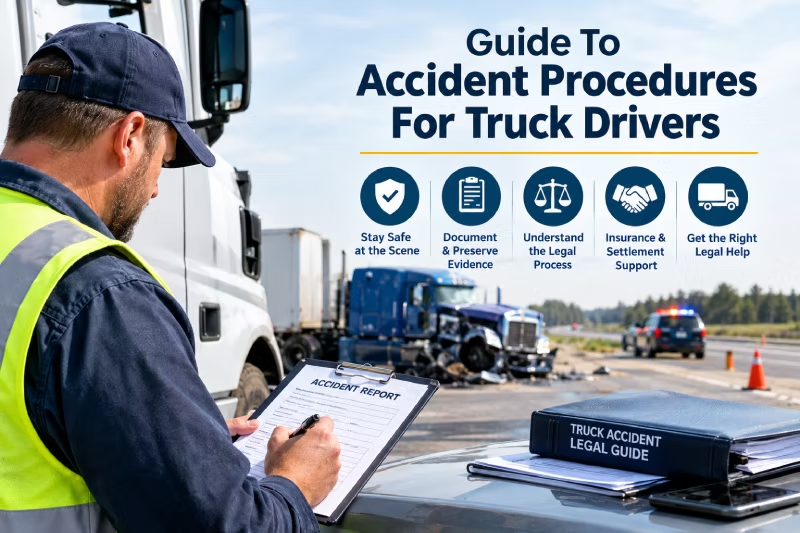
A truck crash can change a driver's life within seconds. Knowing the correct accident procedures for truck drivers can protect lives, help preserve important evidence, support required company and government reporting, and reduce the risk of making a serious mistake after a collision. The steps taken immediately after a commercial truck accident can also affect insurance claims, employment decisions, regulatory investigations, and potential personal injury or wrongful death litigation.
According to the National Highway Traffic Safety Administration, 5,340 people were killed in crashes involving large trucks in 2024, while an estimated 161,201 people were injured in those crashes. Of those killed, 3,753 were occupants of other vehicles and 667 were nonoccupants, showing why the aftermath of a truck collision can involve many people beyond the truck driver.
For a commercial driver, the process does not end when the vehicles stop moving. A driver may need to deal with emergency responders, police officers, the motor carrier, insurance representatives, safety personnel, drug and alcohol testing requirements, vehicle inspections, cargo issues, and possibly attorneys or investigators.
This guide explains what a truck driver should generally do before, during, and after a crash, what information should be preserved, what federal rules may apply, and what mistakes can create additional problems.
Why Truck Accident Procedures Matter
A commercial truck collision is different from an ordinary passenger-vehicle accident.
The vehicle may weigh many times more than a passenger car. It may be carrying valuable or hazardous cargo. The driver may hold a commercial driver's license and be subject to federal and state transportation regulations. The motor carrier may have its own accident-response policy that must be followed in addition to applicable law.
Federal data illustrates the seriousness of these crashes. In 2024, large trucks were involved in 5,218 fatal crashes nationwide. Combination trucks accounted for 3,288 of those vehicles involved in fatal crashes.
That is why a driver should treat the aftermath of a collision as both a safety emergency and a legal and regulatory event.
The first priority is always human safety.
The second priority is preventing another collision or additional injury.
The third is complying with applicable reporting and testing requirements while preserving accurate information about what happened.
A simple post-crash priority
A useful way to remember the process is:
- Protect people.
- Protect the scene.
- Notify the proper authorities.
- Notify the motor carrier.
- Preserve evidence.
- Complete required procedures.
- Get appropriate legal guidance when necessary.
These steps should not be treated as a substitute for following instructions from police, emergency personnel, your employer, or applicable state law.
What To Do Immediately After A Truck Crash
The first few minutes can be chaotic.
A driver may be injured, frightened, confused, or surrounded by traffic. Even so, several actions are extremely important.
Stop and remain at the scene
Never simply drive away from a crash because the truck appears to be operational.
Leaving the scene can create serious legal consequences. FMCSA guidance explains that, for CDL disqualification purposes, leaving the scene of a CMV accident can include situations where state law requires the driver to stop, provide information, render aid, or attempt to locate and notify another involved party.
Move the vehicle only when necessary and lawful, such as when directed by law enforcement or when moving it is reasonably necessary to avoid an immediate traffic hazard.
If you are physically unable to remain at the scene, tell emergency personnel.
Check for injuries
Determine whether anyone needs emergency medical attention.
Call 911 when appropriate and clearly report:
- The location of the crash
- The number of vehicles involved
- Known injuries
- Fire or smoke
- Fuel leaks
- Hazardous materials
- Traffic hazards
- Whether anyone appears trapped
Do not attempt complicated medical treatment unless you are trained to provide it.
Your role is to call for help and provide reasonable assistance within your abilities and safety limits.
Protect yourself from additional traffic
A disabled tractor-trailer can create a major secondary-crash hazard.
If it is safe and lawful, use the truck's emergency warning equipment and follow your company's procedures. Stay away from moving traffic whenever possible.
Do not stand in a travel lane while taking photographs.
A photograph is never worth becoming another crash victim.
Notify Law Enforcement And Your Motor Carrier
After emergency assistance is underway, the driver should notify the appropriate law enforcement agency and the motor carrier.
Many carriers have a formal truck accident response plan. Drivers should know that plan before an accident happens.
The company may require immediate communication with:
- A dispatcher
- Safety department
- Fleet manager
- Risk management personnel
- Claims department
- Company accident hotline
- Designated accident investigator
Follow the carrier's lawful instructions, but do not allow pressure from another person to cause you to violate safety rules, obstruct an investigation, falsify records, or provide information you know is inaccurate.
What should be reported to the company?
Give the carrier factual information such as:
- Exact crash location
- Time of collision
- Vehicles involved
- Injuries known at the time
- Whether police responded
- Whether an ambulance was called
- Whether the truck can be safely moved
- Whether cargo was damaged
- Whether hazardous material may be involved
- Whether the trailer or tractor is leaking
- Whether the truck was towed
- Whether you received a citation
- Whether another vehicle left the scene
Stick to what you know.
For example, saying “The other vehicle crossed into my lane” is different from saying “The other driver was completely at fault.”
The first statement describes an observation. The second is a legal conclusion.
Cooperate With Police And Investigators
A truck driver should cooperate with legitimate law enforcement instructions.
Provide required identification and documents, including a commercial driver's license and other documents requested by authorities.
Answer factual questions truthfully.
At the same time, avoid guessing.
If you do not know the speed of another vehicle, do not estimate it simply because you feel pressured to answer.
You can say:
“I don't know.”
That is generally more reliable than creating an estimate that later appears inconsistent with physical evidence, electronic data, witness statements, or surveillance footage.
Do not admit fault at the scene
A driver should not make statements such as:
- “This was completely my fault.”
- “I wasn't paying attention.”
- “I should have stopped sooner.”
- “The truck brakes failed.”
- “My company never maintains this truck.”
Even statements made casually can later be repeated in reports, insurance files, depositions, or litigation.
This does not mean the driver should lie or hide facts.
The correct approach is to tell the truth about what you observed, cooperate with lawful investigations, and avoid unnecessary conclusions about fault.
Document The Accident Scene
When it is safe and permitted, photographs and video can become important evidence.
A truck accident scene can change quickly. Vehicles may be moved. Debris may be cleared. Weather may change. Tire marks may disappear. Cargo may be unloaded. Witnesses may leave.
Useful photographs can include:
- Overall roadway conditions
- Damage to the tractor
- Damage to the trailer
- Damage to other vehicles
- Tire marks
- Skid marks
- Debris
- Lane markings
- Traffic signals
- Road signs
- Intersections
- Weather conditions
- Visibility conditions
- Cargo damage
- Trailer doors
- Coupling equipment
- Undercarriage damage
- Nearby businesses or cameras
Take wide photographs first, followed by closer photographs.
For example, a photograph showing a damaged bumper is useful. A photograph showing the damaged bumper and its position relative to the lane, intersection, and other vehicles can provide additional context.
Do not interfere with evidence merely to obtain a photograph.
Exchange Information Carefully
Obtain legally required information from other involved parties when possible.
Depending on the jurisdiction and circumstances, this may include:
- Name
- Address
- Telephone number
- Driver's license information
- Vehicle information
- License plate number
- Insurance information
- Employer information
- Witness information
If police are investigating the crash, they may handle much of this information exchange.
Do not argue with another driver about fault.
Do not threaten another driver.
Do not agree to an informal cash payment at the roadside to make the matter disappear.
A seemingly minor truck collision can later involve medical treatment, vehicle damage, lost income, cargo claims, or other losses.
Preserve Electronic And Physical Evidence
Modern commercial trucks can contain significant evidence.
Depending on the vehicle and carrier, potentially relevant information may include:
- Electronic logging device data
- Electronic control module data
- Engine data
- Speed information
- Brake information
- GPS records
- Dispatch records
- Driver communications
- Dash-camera footage
- Forward-facing camera footage
- Driver-facing camera footage
- Collision-avoidance system data
- Maintenance records
- Inspection records
- Load information
- Bills of lading
- Fuel records
- Toll records
- Qualcomm or similar communication records
Drivers should not delete, alter, reset, or manipulate data after a collision.
Do not intentionally overwrite video recordings.
Do not remove an electronic device simply because you believe it could hurt your case.
Evidence preservation is especially important when a serious injury or fatality occurred.
A truck accident attorney may later need to request preservation of records from the carrier, truck owner, maintenance company, shipper, broker, technology provider, or another party.
Understand Post-Accident Drug And Alcohol Testing
One of the most important federal requirements for many commercial drivers involves post-accident testing.
FMCSA rules do not require testing after every minor collision. Specific circumstances determine whether the employer must conduct post-accident alcohol and controlled-substance testing.
FMCSA states that testing is required after certain qualifying crashes, including a crash involving a human fatality. Testing can also be required for certain nonfatal crashes involving immediate medical treatment away from the scene or disabling vehicle damage requiring a tow, depending on whether the driver received a qualifying citation.
For qualifying situations, alcohol testing should occur as soon as practicable and generally within 8 hours, while controlled-substance testing generally must occur within 32 hours.
Drivers should understand another important point: FMCSA rules restrict alcohol use following a qualifying accident. FMCSA guidance states that a driver must not consume alcohol for up to eight hours following an accident or until the post-accident test occurs, whichever happens first.
This is one reason a driver should not decide to have a drink after a stressful crash simply because the driver has finished driving for the day.
Do Not Assume A Truck Is Safe To Drive
A truck that still starts after a collision is not necessarily safe to operate.
Damage may affect:
- Steering
- Brakes
- Tires
- Suspension
- Wheels
- Coupling devices
- Lights
- Trailer structure
- Cargo securement
- Fuel systems
- Electrical systems
Federal rules already require drivers to ensure that certain vehicle components and emergency equipment are in proper working order before operating the vehicle. FMCSA's Safety Planner identifies items such as brakes, steering, lights, tires, mirrors, coupling devices, wheels, rims, and emergency equipment.
After a significant crash, follow instructions from law enforcement, qualified inspectors, your carrier, and other appropriate personnel before putting the vehicle back on the road.
Cargo requires special attention
A collision can shift cargo even when the exterior of the trailer looks normal.
Federal regulations require cargo to be properly distributed and adequately secured. Drivers also have ongoing inspection and adjustment responsibilities during transportation under 49 CFR §392.9.
After a collision, never assume that previously secure cargo remains secure.
If cargo has shifted, damaged the trailer, or created a dangerous condition, the truck should not simply continue down the highway.
Hazardous Materials Require Extra Care
Hazardous-material crashes require additional caution.
If the truck is carrying hazardous materials and there is a spill, leak, fire, damaged container, or other dangerous condition, stay away from the affected area unless you are trained and authorized to respond.
Notify emergency personnel immediately.
Tell responders what hazardous material is being transported when that information is available through the shipping papers, placards, labels, or other required documentation.
Do not approach a leaking tank or damaged container simply to inspect it more closely.
A small mistake around hazardous materials can create risks for the driver, emergency responders, other motorists, and the public.
Understand The Carrier's Accident Records
Truck drivers should also understand that the crash can become part of the motor carrier's formal records.
Under 49 CFR §390.15, motor carriers must maintain an accident register for three years after each qualifying accident. The register includes information such as the accident date, location, driver name, injuries, fatalities, and certain hazardous-material release information. The rule also addresses accident reports required by states, other governmental entities, or insurers.
This matters because an accident may have consequences beyond the immediate insurance claim.
A carrier may review the driver's safety record.
A regulator may examine the carrier's safety practices.
An attorney may request relevant records during litigation.
An insurer may investigate the circumstances.
The driver's post-crash documentation should therefore be accurate, complete, and consistent.
Be Careful With Insurance Companies And Recorded Statements
After a commercial truck accident, several insurance companies may become involved.
There may be coverage for:
- The tractor
- The trailer
- The motor carrier
- Cargo
- Another vehicle
- Commercial liability
- Workers' compensation
- Additional policies held by other parties
An insurer may contact the driver quickly.
That does not mean every question should be answered without understanding its purpose.
A driver should provide required information and cooperate with the driver's own employer and applicable claims process, but serious injury or fatality cases can involve substantial legal exposure. In those situations, obtaining advice from an attorney familiar with commercial trucking cases may be appropriate before giving a detailed recorded statement outside legally required processes.
Never exaggerate.
Never minimize an injury simply because symptoms have not fully appeared.
Never change your account to make it sound better.
When Should A Truck Driver Speak With A Truck Accident Attorney?
Not every minor fender-bender requires personal legal representation.
However, legal advice can become particularly important when the crash involves:
- A fatality
- Serious bodily injury
- Multiple vehicles
- A disputed version of events
- A citation
- Allegations of impairment
- A rollover
- A jackknife
- A cargo spill
- Hazardous materials
- Significant property damage
- Possible mechanical failure
- Disputed driver hours
- Electronic data
- Employer pressure
- Potential termination
- A serious injury to the driver
A lawyer can help explain the difference between regulatory compliance, an insurance claim, and potential civil litigation.
Those are separate issues.
For example, receiving a traffic citation does not automatically determine every question of civil liability. Likewise, an employer's internal investigation is not the same thing as a court's determination of liability.
Common Mistakes Truck Drivers Should Avoid
Some post-crash mistakes are surprisingly simple.
Mistake 1: Leaving the scene
Never leave unless permitted or legally required for an emergency.
Mistake 2: Guessing what happened
If you do not remember something, say so.
Mistake 3: Deleting electronic evidence
Do not delete videos, messages, ELD records, or other potentially relevant information.
Mistake 4: Continuing to drive a damaged truck
A truck can have serious mechanical or cargo problems even when it appears driveable.
Mistake 5: Discussing the crash publicly
Avoid posting photographs, accusations, or detailed descriptions of the crash on social media.
Mistake 6: Ignoring medical symptoms
Some injuries become noticeable hours or days later.
Mistake 7: Signing documents without understanding them
If a document concerns liability, settlement, injury claims, or legal rights, understand what you are signing before signing it.
Mistake 8: Allowing someone else to rewrite your report
Your report should accurately reflect what you personally know.
A Practical Truck Driver Accident Checklist
Keep a copy of this checklist with your important driving documents or company safety materials.
Immediately after the collision:
- Stop safely.
- Call 911 when necessary.
- Check for injuries.
- Warn approaching traffic.
- Follow emergency instructions.
- Remain at the scene.
- Notify your carrier.
- Cooperate with law enforcement.
- Avoid admitting fault.
- Avoid guessing.
- Photograph the scene when safe.
- Obtain witness information.
- Preserve electronic evidence.
- Protect cargo and shipping documents.
- Report hazardous materials concerns.
- Follow post-accident testing instructions.
- Do not consume alcohol after a qualifying crash.
- Do not operate a damaged vehicle without appropriate authorization or inspection.
- Keep copies of important records.
- Seek legal advice when the circumstances justify it.
Example: How A Driver Should Handle A Serious Collision
Consider a tractor-trailer traveling through an interstate interchange when another vehicle changes lanes and strikes the trailer.
The driver pulls over safely and calls 911. The driver checks for injuries, activates appropriate emergency equipment, and informs the dispatcher.
Police arrive and investigate.
The driver does not tell the other motorist, “You caused this entire accident.” Instead, the driver explains what was observed: where the truck was traveling, what the driver saw, and what happened immediately before impact.
The driver photographs the truck, roadway, lane markings, damage, and surrounding area when safe.
The driver reports the collision to the carrier and follows its post-accident instructions.
If the crash qualifies for federal post-accident testing, the driver complies with the required process.
The driver does not delete dash-camera footage or alter electronic records.
Later, if the other party claims the truck changed lanes improperly, the preserved video, vehicle damage, roadway evidence, witness accounts, and electronic information may become important in determining what actually happened.
That is why the best post-crash strategy is not to create a story.
It is to preserve the facts.
Federal Resources Truck Drivers Should Know
Drivers and attorneys can use official federal resources when reviewing commercial vehicle accident requirements.
The Federal Motor Carrier Safety Administration provides information on post-accident drug and alcohol testing, including the circumstances that trigger testing and applicable time limits.
The FMCSA Safety Planner provides additional information concerning vehicle inspections, equipment, cargo securement, accident records, and other motor-carrier compliance issues.
The federal regulation concerning accident records is found at 49 CFR §390.15.
Drivers should also remember that state accident laws vary. Federal motor-carrier regulations do not replace every state requirement governing reporting, stopping, exchanging information, insurance, evidence, or civil claims.
For legal deadlines, reporting requirements, or liability questions, the applicable state's law should be reviewed.
What Truck Drivers Should Remember
A truck accident is not over simply because the vehicles have stopped.
The driver's actions afterward can affect safety, evidence, regulatory compliance, employment issues, insurance claims, and litigation.
The most important principles are straightforward:
Protect people first.
Stay at the scene.
Report the collision properly.
Tell the truth without guessing.
Preserve evidence.
Follow testing requirements.
Do not operate unsafe equipment.
Document what you personally observed.
Do not destroy or alter records.
Get legal advice when the circumstances call for it.
The current national data also shows why these procedures matter. NHTSA reported 5,340 deaths in crashes involving large trucks in 2024, including 920 large-truck occupants, 3,753 occupants of other vehicles, and 667 nonoccupants.
A driver cannot control every factor that causes a crash. But a driver can control many of the decisions made in the minutes and hours afterward.
The safest approach is to remain calm, protect the scene, cooperate with legitimate authorities, follow applicable federal and state requirements, preserve evidence, and avoid statements or actions that go beyond what the driver actually knows.
Good accident response starts with safety and ends with accurate documentation.
Reference resources:
What Happens After The Accident Scene Is Cleared?
Once emergency personnel and law enforcement finish their initial work, the driver may assume the hardest part is over. In many serious truck crashes, however, the investigation is only starting.
A commercial truck accident can generate several separate investigations at the same time. Law enforcement may investigate traffic violations or potential criminal conduct. The motor carrier may conduct an internal safety investigation. Insurance companies may examine liability and damages. Government agencies may review regulatory compliance. If someone is seriously injured or killed, attorneys for multiple parties may begin preserving and collecting evidence.
The driver should therefore continue treating the matter seriously even after leaving the scene.
Do not assume that silence means the matter is closed.
A driver should keep track of what happened, what documents were received, who was contacted, and what instructions were given. Creating a private factual timeline while memories are fresh can be useful, provided it is truthful and does not involve altering or destroying company records.
Create a personal accident timeline
As soon as practical, write down what you personally remember.
Include:
- Approximate time of the crash
- Road and lane you were using
- Weather conditions
- Traffic conditions
- Visibility
- What happened immediately before impact
- What you saw
- What you heard
- Where the vehicles came to rest
- Police response
- Medical response
- Names of known witnesses
- Instructions received from the carrier
- Any citations issued
- Medical treatment received
- Vehicle towing information
Avoid turning the timeline into an argument about who was legally responsible.
For example, instead of writing, “The other driver recklessly caused the crash,” write what you actually observed: “The passenger vehicle moved from the right lane into the truck's lane immediately before contact.”
That distinction can become important later.
Understand The Difference Between A Crash Report And A Legal Claim
Truck drivers often hear several terms used interchangeably even though they mean different things.
A police crash report records an officer's investigation.
An insurance claim is a demand or request for coverage or payment under an insurance policy.
A civil lawsuit is a formal court proceeding.
A carrier accident report is an internal document prepared for the motor carrier or its insurer.
A regulatory investigation concerns compliance with transportation laws and regulations.
These processes can overlap, but one does not automatically decide all the others.
For example, a police officer may issue a citation based on an observed traffic violation. That citation may become evidence in a later civil case, but it does not necessarily answer every question concerning damages, comparative fault, employer responsibility, vehicle maintenance, cargo loading, or insurance coverage.
Review The Police Report Carefully
If a police report becomes available, the driver should review it for factual accuracy.
Check basic information such as:
- Your name
- Driver's license information
- Vehicle identification
- Employer information
- Crash location
- Date and time
- Direction of travel
- Vehicle descriptions
- Injury information
- Witness information
- Statements attributed to you
A report may contain an officer's interpretation of the crash rather than a complete reconstruction of every event.
If you believe a factual statement is wrong, do not attempt to alter the report yourself or pressure anyone to change evidence. Instead, discuss the issue with the appropriate authority or legal counsel.
Understand Citations And Criminal Exposure
A commercial driver may receive a traffic citation following a collision.
Potential violations can involve matters such as:
- Speed
- Following distance
- Lane use
- Signals
- Failure to obey traffic controls
- Hours-of-service violations
- Equipment violations
- Cargo securement
- Distracted driving
- Reckless driving
- Impaired driving
A citation should never be ignored simply because the driver believes the other motorist caused the crash.
Read the citation carefully and identify the applicable deadline.
Depending on the offense and jurisdiction, a conviction can affect a driver's record, CDL status, employment, insurance, and future driving opportunities.
FMCSA specifically identifies leaving the scene of an accident involving a commercial motor vehicle as a disqualifying offense under the federal CDL rules when the conduct falls within the applicable state-law requirements. (FMCSA)
That is one reason why remaining at the scene and following applicable reporting requirements is so important.
Do not ignore a court date
If a citation requires a court appearance, make sure the deadline is understood.
A driver should not assume that the carrier will automatically handle a personal traffic citation. Some employers provide legal support, while others require drivers to arrange their own representation.
The consequences can vary considerably depending on the state, the offense, the driver's CDL status, and the facts of the collision.
Preserve Your Hours-Of-Service Information
Hours-of-service information can become an important part of a truck accident investigation.
Investigators may want to understand:
- How long the driver had been working
- When the driver began driving
- When rest periods occurred
- Whether the driver was operating within applicable HOS limits
- Whether there were prior duty-status changes
- Where the truck had traveled
- Whether the driver's account matches other evidence
Electronic logging devices make this information more structured than it was when drivers relied primarily on paper logs.
FMCSA states that motor carriers generally must retain ELD records of duty status and supporting data for six months. (FMCSA)
Drivers should never attempt to manipulate an electronic log after a collision to make the record appear more favorable.
FMCSA guidance states that ELD records cannot simply be deleted to correct an error. Corrections are made through permitted edits and annotations while the original record remains available. (FMCSA)
Why ELD data can matter
Imagine that a crash occurs at 7:30 p.m.
The driver later says that he had been driving for only a few hours. Investigators may compare that statement against ELD information, dispatch records, GPS data, fuel purchases, toll records, delivery records, and other evidence.
If the records are accurate, they can help establish a reliable timeline.
If someone attempts to alter the records after the crash, that can create a completely different problem.
Accurate records protect everyone.
What If The ELD Is Damaged?
A serious collision can damage the truck's electronic systems.
Drivers should not attempt unauthorized repairs, resets, or modifications simply to make the equipment work again.
FMCSA guidance explains that when an ELD is replaced or reset, records covering the current 24-hour period and previous seven days still need to be retained through the applicable process. (FMCSA)
The proper response should generally involve the carrier's authorized personnel and applicable ELD procedures.
A damaged device does not automatically mean the underlying information disappears.
Preserve Dash-Camera And Surveillance Footage
Video evidence can be extremely valuable in a truck accident investigation.
Potential sources include:
- Truck dash cameras
- Driver-facing cameras
- Trailer cameras
- Highway cameras
- Traffic-light cameras
- Toll facilities
- Police body cameras
- Nearby business cameras
- Residential security cameras
- Other motorists' dash cameras
Some systems overwrite older footage automatically.
That means early preservation can matter.
A driver who knows that a truck camera captured the collision should immediately notify the appropriate carrier personnel and, when appropriate, legal counsel so that the footage can be preserved under the applicable process.
Drivers should not secretly copy, modify, erase, or distribute company video.
The goal is to preserve evidence, not control which evidence survives.
Truck Inspection After A Collision
A commercial truck should be inspected carefully after a significant accident.
The inspection may involve:
- Braking system
- Steering components
- Tires and wheels
- Suspension
- Frame
- Fifth wheel
- Kingpin
- Trailer coupling
- Lights
- Fuel system
- Electrical components
- Cargo securement
- Trailer doors
- Safety equipment
The exact inspection requirements depend on the circumstances and applicable regulations.
A driver should report known damage rather than assuming someone else will discover it.
For example, a trailer may appear visually intact while the collision has damaged a wheel-end component or shifted cargo inside the trailer.
Never hide mechanical damage.
The short-term goal of keeping a truck moving should never take priority over preventing another crash.
What Happens To The Truck After A Serious Crash?
In major cases, the truck may be towed to a storage yard, repair facility, inspection location, or other secured property.
This can become important because the truck itself may contain physical evidence.
Evidence can include:
- Tire condition
- Brake condition
- Steering components
- Vehicle damage
- ECM information
- ELD information
- Safety equipment
- Coupling components
- Cargo condition
- Vehicle modifications
- Maintenance-related evidence
If litigation is reasonably anticipated, attorneys may seek to preserve the truck and other physical evidence rather than allowing important components to be repaired, discarded, or altered before inspection.
A driver should not independently dismantle or repair evidence.
Maintenance Records Can Become Important
A truck accident investigation does not always focus exclusively on the driver.
Investigators may examine whether the vehicle was properly maintained.
Potential records can include:
- Preventive maintenance records
- Repair invoices
- Inspection reports
- Brake inspections
- Tire records
- Recall information
- Work orders
- Driver vehicle inspection reports
- Prior defect reports
This becomes particularly important when the crash may involve a mechanical problem.
Consider a hypothetical example.
A driver reports that the truck pulled sharply to one side immediately before a collision. Investigators may later examine steering components, tire condition, maintenance records, prior complaints, and repair history.
That investigation may involve questions about more than the driver's conduct.
What If The Truck Had A Mechanical Problem?
If you believe a mechanical defect contributed to the accident, document what you personally experienced.
For example:
“The steering became difficult immediately before the truck crossed the lane line.”
That is different from stating:
“The steering system definitely failed.”
The first is an observation.
The second is a technical conclusion that may require inspection by a qualified expert.
This distinction is especially important in litigation because mechanical failure can involve engineering, maintenance, manufacturing, inspection, or component-specific questions.
Cargo Loading And Securement Investigations
Truck accident investigations may also examine how cargo was loaded.
Questions can include:
- Who loaded the cargo?
- Was the load properly distributed?
- Was the cargo properly secured?
- Were tie-downs used correctly?
- Was the trailer overloaded?
- Did cargo shift?
- Were there damaged restraints?
- Were loading instructions followed?
Federal regulations address cargo securement requirements, but responsibility can involve multiple parties depending on the shipment and contractual arrangements.
A driver should document concerns that existed before the collision.
If a driver previously reported loose cargo, damaged straps, shifting weight, or another safety issue, those communications may become relevant later.
Keep Your Own Medical Records
Truck drivers sometimes make the mistake of assuming they are uninjured because they can walk away from the crash.
Some injuries may not become obvious immediately.
Possible symptoms can include:
- Neck pain
- Back pain
- Headaches
- Shoulder pain
- Numbness
- Dizziness
- Sleep problems
- Concentration problems
- Joint pain
A driver who develops symptoms should seek appropriate medical attention.
Medical documentation should accurately describe the symptoms and circumstances.
Do not exaggerate symptoms.
Do not minimize them simply because you are worried about missing work.
A commercial driver may also need to understand whether the injury affects the driver's ability to safely perform commercial driving duties.
Workers' Compensation May Be A Separate Issue
A truck driver who is injured while working may have workers' compensation issues in addition to the accident claim.
The answer depends heavily on the driver's employment relationship and state law.
A driver may potentially have questions involving:
- Medical treatment
- Temporary disability
- Lost wages
- Permanent impairment
- Return-to-work restrictions
- Employer reporting
- Workers' compensation benefits
An employee's workers' compensation claim and a third-party injury claim are not necessarily the same thing.
For example, if a truck driver is injured when another company's vehicle crashes into the tractor-trailer, the driver may have employment-related benefits while a separate claim may exist against another responsible party, depending on the facts and applicable law.
Because workers' compensation laws are state-specific, drivers should obtain advice based on the state involved.
What If The Driver Is Fired After The Crash?
A serious accident can trigger an employer's internal review.
The carrier may examine:
- Driver training
- Safety history
- Prior incidents
- Policy violations
- Vehicle inspection records
- HOS compliance
- Accident circumstances
- Customer complaints
- Driver statements
An employer may take disciplinary action depending on the facts and company policies.
But drivers should distinguish between an employer's internal decision and a legal finding that the driver caused the collision.
If a driver is terminated, suspended, or pressured to resign following a serious crash, preserving relevant employment documents may be useful.
Keep copies of documents you are legally entitled to possess, such as personal employment communications, pay records, notices, or citations. Do not take confidential company information or proprietary records without authorization.
When Multiple Parties May Be Involved
A truck accident can involve more parties than the truck driver and the other motorist.
Depending on the circumstances, potential parties may include:
- Motor carrier
- Truck owner
- Trailer owner
- Leasing company
- Maintenance provider
- Parts manufacturer
- Vehicle manufacturer
- Shipper
- Loader
- Freight broker
- Another motorist
- Government entity responsible for roadway conditions
- Insurance companies
That does not mean every listed party is legally responsible.
It means the investigation may need to determine who had what role and what evidence supports each theory of responsibility.
This is one reason commercial truck cases can become much more complicated than ordinary two-car collisions.
Truck Accident Evidence: What Should Be Preserved?
A useful way to think about evidence is to divide it into four groups.
| Evidence Category | Examples | Why It May Matter |
|---|---|---|
| Driver evidence | Statements, logs, training records | Helps establish driver activity and timeline |
| Vehicle evidence | Damage, tires, brakes, ECM | May show mechanical or impact evidence |
| Digital evidence | ELD, GPS, cameras, dispatch data | Can establish timing, location and movement |
| Scene evidence | Photos, measurements, witnesses | Helps reconstruct what occurred |
The strongest investigation often comes from comparing these sources rather than relying on a single document.
For example, a driver's recollection may be compared with camera footage, ELD information, vehicle damage, roadway evidence, and witness testimony.
When independent sources tell the same story, they may help establish a clearer factual record.
Communicating With Your Employer After The Crash
Keep communications factual and professional.
If the carrier asks what happened, provide an accurate account.
Avoid:
- Speculation
- Insults
- Blaming coworkers
- Guessing another driver's speed
- Making unsupported mechanical claims
- Altering records
- Deleting messages
- Discussing confidential information publicly
A good factual communication might be:
“The collision occurred at approximately 6:40 p.m. near the intersection. I was traveling in the right lane. The other vehicle entered the lane immediately before contact. Police and EMS responded.”
That is much more useful than a long emotional message containing assumptions and accusations.
Social Media After A Truck Accident
Social media can create unnecessary problems after a serious crash.
Avoid posting:
- Crash-scene photographs
- Statements about fault
- Arguments with other drivers
- Statements about injuries
- Statements about alcohol or medication
- Comments about police
- Claims about your employer
- Confidential company information
- Statements about pending legal proceedings
Even a joke can be misunderstood when separated from its original context.
A driver's best practice is simple:
Keep the accident off social media.
What A Truck Accident Attorney May Investigate
When an attorney becomes involved, the investigation may go far beyond the police report.
Depending on the case, counsel may seek:
- Accident reports
- Photographs
- Video
- ELD data
- GPS records
- Dispatch records
- Driver qualification records
- Training materials
- Maintenance records
- Inspection records
- Bills of lading
- Cargo records
- Cell-phone records when legally obtainable
- Witness statements
- Medical records
- Insurance policies
- Prior safety records
- Vehicle inspection information
The purpose is not simply to collect a large amount of paperwork.
The purpose is to reconstruct what happened using reliable evidence.
Why Early Evidence Preservation Matters
Evidence can disappear.
A damaged truck may be repaired.
A trailer may be returned to service.
Camera footage may be overwritten.
Electronic records may become harder to obtain.
A witness may forget details.
A vehicle may be sold.
A component may be discarded during repairs.
That is why serious cases may require prompt evidence-preservation steps.
The driver should not personally threaten or pressure witnesses. Instead, concerns about preserving evidence should be directed to the appropriate company representative, insurer, or attorney.
A Driver's Rights And Responsibilities Can Overlap
Truck drivers sometimes ask whether they should protect themselves or cooperate with the investigation.
In most situations, these are not opposing goals.
A driver can:
- Cooperate with emergency personnel.
- Provide truthful information.
- Follow lawful police instructions.
- Complete required testing.
- Report the crash to the carrier.
- Preserve evidence.
- Seek legal advice.
- Avoid speculation.
- Avoid destroying records.
Truthful cooperation and legal protection can exist together.
The important point is to understand which information is required by law, which information is requested by an employer or insurer, and which issues may require legal advice.
A Practical 24-Hour Post-Crash Plan
The first day after a serious truck accident can feel overwhelming.
A simple checklist can help.
First few hours
- Confirm emergency treatment.
- Follow police instructions.
- Notify the carrier.
- Follow testing requirements.
- Record basic facts.
- Preserve photographs.
- Preserve relevant personal communications.
- Identify witnesses.
- Keep citations and paperwork.
Later that day
- Obtain appropriate medical evaluation.
- Write down your factual recollection.
- Confirm where the truck was taken.
- Identify the towing or storage facility.
- Notify the appropriate company contact about known evidence.
- Avoid social media discussions.
- Do not delete electronic information.
Within the following days
- Follow medical instructions.
- Keep copies of relevant documents.
- Track missed work or medical appointments.
- Review citations and deadlines.
- Consider whether legal advice is appropriate.
- Do not provide inconsistent versions of events.
- Continue preserving relevant information.
The Importance Of Consistency
One of the most important principles after a serious collision is consistency.
Your account should remain based on what you actually remember.
Memory can change over time. That is normal.
The solution is not to memorize a story.
The solution is to document facts early and correct genuine mistakes honestly.
For example, if you initially tell police that the crash occurred around 8:00 p.m. and later obtain an official record showing it occurred at 7:45 p.m., that does not necessarily mean you lied. You may simply have estimated the time.
But intentionally changing facts to improve your position is very different.
What If You Are Asked To Sign A Settlement?
A driver should be careful before signing documents that release claims or rights.
Settlement documents can have significant legal consequences.
A release may affect future claims involving:
- Personal injury
- Property damage
- Lost income
- Medical expenses
- Other legal rights
The exact effect depends on the document and applicable law.
Do not sign a settlement simply because someone says, “This is just paperwork.”
Read it carefully.
If you do not understand what you are giving up, seek appropriate legal advice before signing.
Key Takeaways So For
After a truck accident, the driver's responsibilities continue long after the tow truck leaves.
The most important practices are:
- Document facts promptly.
- Preserve ELD information.
- Do not delete electronic records.
- Protect dash-camera footage.
- Follow required testing procedures.
- Review citations carefully.
- Seek medical attention when appropriate.
- Preserve relevant employment documents.
- Avoid social-media discussions.
- Do not guess about disputed facts.
- Do not alter accident evidence.
- Understand that several investigations may occur simultaneously.
- Get legal guidance when the accident involves serious injury, death, disputed liability, citations, or significant evidence.
FMCSA's current ELD guidance confirms that original electronic records remain available when permitted corrections are made and that deleting ELD records to correct an error is not permitted. (FMCSA)
Likewise, federal CDL guidance makes clear that leaving the scene of a qualifying commercial motor vehicle accident can have serious licensing consequences. (FMCSA)
The practical lesson is simple: after a commercial truck crash, preserve the facts before assumptions take their place.
Understanding The Legal Process After A Truck Accident
A serious truck accident can move from an accident investigation into a legal claim without the driver fully understanding when that transition occurred.
The process may involve an insurance claim first. If the parties cannot resolve the dispute, a lawsuit may follow. In more serious cases, there may also be separate regulatory, administrative, or criminal proceedings.
A truck driver should understand that these proceedings can have different purposes.
An insurance company may be evaluating whether a policy provides coverage and how much a claim may be worth. A civil lawsuit may determine whether a party is legally responsible for injuries or property damage. A regulatory agency may be examining compliance with federal or state transportation rules. A criminal case, if one exists, concerns alleged violations of criminal law.
One proceeding does not automatically decide every other issue.
How a truck accident claim may develop
A typical serious claim may move through several stages:
- Accident and emergency response
- Police investigation
- Carrier investigation
- Insurance investigation
- Evidence preservation
- Medical treatment and documentation
- Demand or claim evaluation
- Negotiation
- Filing of a lawsuit, if necessary
- Discovery and evidence exchange
- Depositions and expert review
- Settlement or trial
Not every accident reaches every stage.
Many claims are resolved before trial. Others become highly contested because the parties disagree about how the collision happened, who was responsible, or the extent of the resulting damages.
What Evidence Can Affect A Truck Accident Case?
Truck accident cases can involve an unusually large amount of evidence.
A lawyer investigating a serious collision may examine evidence from several different sources rather than relying on one accident report.
Potential evidence may include:
- Police reports
- Photographs
- Dash-camera footage
- Traffic-camera footage
- Witness statements
- ELD records
- GPS data
- Dispatch records
- Cell-phone records when legally obtainable
- Vehicle inspection reports
- Maintenance records
- Driver qualification records
- Training records
- Drug and alcohol testing records where legally relevant
- Medical records
- Cargo documents
- Bills of lading
- Weather information
- Roadway evidence
- Vehicle damage
- Black-box or electronic control module data
- Insurance records
The importance of each item depends on the facts.
For example, ELD records may help establish a timeline, while video may help show vehicle movements. Maintenance records may become important if a mechanical failure is alleged.
The goal is to determine what the evidence actually shows, not to collect documents simply because they exist.
The Driver's Qualification And Training Records
In a serious collision, investigators may examine whether the driver was properly qualified and trained.
Federal motor-carrier requirements cover areas such as driver qualification and safety compliance.
Depending on the circumstances, relevant records may include:
- Commercial driver's license information
- Medical qualification information
- Employment history
- Road-test information
- Training records
- Safety training
- Prior violations
- Previous accidents
- Employer evaluations
- Drug and alcohol compliance records
A prior accident does not automatically establish that a driver caused a later accident.
Likewise, the existence of a violation does not automatically establish legal responsibility for a particular collision.
Each fact must be connected to the circumstances of the crash.
How Carrier Safety Data Can Enter The Investigation
Commercial carriers are subject to FMCSA's Safety Measurement System, commonly known as SMS.
FMCSA explains that SMS uses information from roadside inspections, crash reports, and investigations to identify patterns and prioritize safety interventions. The system uses several categories, including unsafe driving, hours-of-service compliance, vehicle maintenance, controlled substances and alcohol, hazardous materials compliance, driver fitness, and crash involvement.
FMCSA also explains that reportable commercial motor vehicle crashes can be included in its crash data when they involve a fatality or injury or require a vehicle to be transported from the crash scene, regardless of the carrier's or driver's role in the crash.
This distinction is important.
Crash involvement is not the same as legal fault.
A carrier may have a reportable crash even when the truck driver was not responsible for causing it.
FMCSA also states that its crash preventability determinations do not establish fault or legal liability in a civil or criminal case.
Accident Registers And Carrier Records
Federal regulations require motor carriers to maintain an accident register for qualifying crashes occurring during the previous three years.
FMCSA's Safety Planner states that the register must include information such as the date and location of the crash, driver's name, injuries or fatalities, and certain hazardous-material release information.
This means that a commercial accident can remain part of a carrier's regulatory record long after the vehicles have been repaired.
For a driver, the lesson is straightforward:
Do not assume the accident disappears when the insurance claim ends.
Different records may be retained for different periods, and different federal, state, insurance, employment, and litigation requirements may apply.
What Happens If The Other Driver Claims The Truck Driver Was At Fault?
Disputed liability is common in serious truck accident cases.
The other driver may claim:
- The truck was speeding.
- The truck changed lanes improperly.
- The driver was following too closely.
- The truck driver was distracted.
- The truck driver was fatigued.
- The driver failed to yield.
- The truck had defective equipment.
The truck driver may have a different account.
The appropriate response is not to argue with the other driver.
Instead, preserve evidence that can help establish what happened.
That may include:
- Camera footage
- ELD records
- Vehicle data
- Witness information
- Photographs
- Police reports
- Roadway evidence
- Damage patterns
- Dispatch information
A driver's personal recollection is important, but it is only one piece of the investigation.
What If The Truck Driver Believes The Other Driver Caused The Crash?
A driver should report the facts supporting that position.
For example, if a passenger vehicle suddenly entered the truck's lane, the driver can explain what was observed and where the vehicles were positioned.
Avoid statements that go beyond personal knowledge.
Instead of:
“The other driver was texting.”
a driver who did not actually see a phone should say:
“I saw the vehicle move into my lane, but I did not see what the driver was doing inside the vehicle.”
This approach keeps the account factual.
Observation is different from assumption.
Comparative Fault And Shared Responsibility
Some truck accident cases involve allegations that more than one party contributed to the collision.
Depending on the state's law, responsibility may be divided among multiple parties.
For example, a case might involve allegations concerning:
- A truck driver
- Another motorist
- A trucking company
- A maintenance provider
- A cargo loader
- A vehicle manufacturer
- A roadway condition
The precise rules vary by state.
Some jurisdictions use comparative-fault systems, while others apply different rules concerning recovery when more than one party is responsible.
A driver should therefore avoid assuming that a collision automatically becomes a simple “truck driver versus passenger driver” dispute.
The actual legal analysis can be much broader.
Truck Accident Insurance Can Be Complicated
Commercial trucking insurance can involve substantial coverage and multiple policies.
Depending on the situation, there may be:
- Primary commercial auto liability coverage
- Excess or umbrella coverage
- Cargo insurance
- Trailer coverage
- General liability coverage
- Workers' compensation
- Additional coverage involving another company
The existence and limits of a particular policy depend on the facts and contractual arrangements.
A driver should not assume that the policy covering the tractor is the only relevant policy.
For example, a collision involving a leased tractor, a separately owned trailer, a motor carrier, and a shipper may require investigation into several contractual and insurance relationships.
What Is A Truck Accident Settlement?
A settlement is an agreement in which the parties resolve some or all disputed claims without obtaining a final trial judgment.
A settlement may involve payment in exchange for a release of certain legal claims.
The amount and terms depend on the circumstances.
Potential damages in a personal injury case can include categories such as:
- Medical expenses
- Future medical care
- Lost income
- Reduced earning capacity
- Property damage
- Pain and suffering
- Other legally recognized losses
The categories available vary according to the applicable law and facts.
A driver who is personally injured may also have separate employment-related issues, including workers' compensation questions.
Why settlement value cannot be determined from the crash alone
Two accidents that appear similar may produce very different legal claims.
Factors can include:
- Severity of injuries
- Medical treatment
- Permanency of injuries
- Lost income
- Available insurance
- Evidence of liability
- Comparative responsibility
- Number of injured people
- Applicable state law
- Available witnesses
- Quality of documentation
A settlement should therefore not be based solely on vehicle damage.
A truck with relatively modest visible damage can still be involved in a collision causing significant injury.
Likewise, a severely damaged truck does not automatically establish the amount of another person's recoverable damages.
Do Not Rush To Settle A Serious Injury Claim
A quick settlement can sometimes appear attractive immediately after an accident.
The problem is that injuries may not be fully understood early in the process.
A person may still be undergoing:
- Diagnostic testing
- Physical therapy
- Surgery
- Specialist treatment
- Rehabilitation
- Follow-up care
Future medical needs may not yet be known.
Before accepting a settlement involving significant injuries, the person should understand what rights are being released and whether the proposed resolution accounts for known and reasonably anticipated losses under the applicable law.
Once a properly executed release becomes effective, reopening the claim may be difficult or impossible.
Statutes Of Limitation Matter
Every state has legal deadlines for different types of claims.
These deadlines are commonly called statutes of limitation.
The deadline can depend on:
- Type of claim
- Person bringing the claim
- Defendant involved
- Government entity involvement
- Date of injury
- Discovery rules
- Wrongful-death claims
- Contract issues
- Applicable federal law
There can also be shorter notice requirements when a government entity is involved.
Because these deadlines are state-specific, a driver or injured person should not rely on a generic internet deadline.
A legal deadline should be verified for the specific state and claim.
Waiting until the last few days before a deadline can also create practical problems because evidence may need to be collected before a lawsuit is filed.
Wrongful Death Cases Involving Truck Crashes
Some truck accidents result in fatalities.
These cases can involve wrongful-death claims brought by legally recognized surviving family members or representatives, depending on state law.
Potential issues may include:
- Medical expenses before death
- Funeral expenses
- Lost financial support
- Loss of services
- Loss of companionship
- Other damages recognized by the applicable state
Wrongful-death laws vary significantly from one state to another.
A fatal truck collision can also trigger separate investigations involving law enforcement, the motor carrier, insurers, regulators, and attorneys.
The preservation of evidence becomes especially important in these cases.
When A Federal Investigation May Become Relevant
Not every truck crash results in a federal investigation.
However, certain serious crashes or safety concerns may attract regulatory attention.
A federal or state investigation may examine:
- Driver qualifications
- Hours of service
- Vehicle condition
- Maintenance
- Drug and alcohol compliance
- Cargo securement
- Hazardous materials
- Carrier safety practices
- Accident history
A regulatory investigation is not automatically a finding that the driver caused the crash.
It is an investigation into compliance and safety issues within the agency's authority.
Working With Experts In A Serious Truck Accident
Complex truck cases may require expert analysis.
Depending on the dispute, experts may address:
- Accident reconstruction
- Mechanical engineering
- Human factors
- Trucking safety
- Driver training
- Medical issues
- Vocational impact
- Economics
- Roadway engineering
- Cargo loading and securement
An accident reconstruction expert, for example, may examine vehicle positions, photographs, physical evidence, event-data information, roadway measurements, and other available evidence.
A mechanical expert may examine brakes, steering, tires, suspension, or other components.
The need for an expert depends on the facts and legal issues.
What Truck Drivers Should Do If An Attorney Contacts Them
A driver may be contacted by an attorney representing another party.
The driver should remain professional.
Do not:
- Argue
- Threaten
- Speculate
- Delete information
- Change records
- Make false statements
If the attorney represents another party, the driver should understand who that lawyer represents before providing detailed information.
In a serious or disputed case, the driver may want to consult personal counsel before giving a detailed interview or signing documents.
The carrier may have its own attorney.
That attorney's duties and representation should be clearly understood rather than assumed.
What If The Truck Driver Is Personally Sued?
If a driver receives a summons, complaint, subpoena, or other formal legal document, it should not be ignored.
Read the document carefully.
Identify:
- Court
- Case number
- Parties
- Filing date
- Response deadline
- Hearing date
- Attorney information
- Insurance or employer information
Notify the appropriate carrier and insurer promptly if required.
Also consider obtaining independent legal advice, particularly if there may be a conflict between the driver's interests and the carrier's interests.
A lawsuit should never be placed in a drawer and forgotten.
Failure to respond within the applicable deadline can create serious procedural consequences.
What If The Driver Receives A Subpoena?
A subpoena is different from an ordinary request for information.
It may require the driver to:
- Appear for testimony
- Produce documents
- Provide records
- Attend a deposition
- Appear at a hearing or trial
Do not ignore it.
Do not destroy documents because you have received a subpoena.
Do not contact opposing parties to argue about the case.
A lawyer can explain what the subpoena requires and whether objections or other legal responses are available.
How Truck Drivers Can Prepare Before An Accident Happens
The best accident procedure starts before the accident.
Drivers should know their carrier's accident-response plan before beginning a trip.
A useful pre-trip emergency plan can include:
- Carrier accident hotline
- Safety department contact
- Insurance contact information
- Emergency contacts
- Required company forms
- Camera procedures
- ELD procedures
- Drug-testing instructions
- Medical reporting procedures
- Preferred towing process
- Emergency equipment
Drivers should also understand how to access important information without creating a distraction while driving.
Keep an accident kit
A company-approved accident kit may contain:
- Pen and paper
- Flashlight
- High-visibility equipment
- Emergency warning equipment
- Company accident forms
- Carrier contact information
- Insurance information
- Measuring tools if company policy permits
- Camera or approved documentation equipment
The exact contents should follow company policy and applicable law.
The kit should support safety rather than encourage a driver to remain in a dangerous roadway environment.
A Complete Truck Driver Accident Response Checklist
The following checklist can be saved as a reference.
At the scene
- Stop.
- Stay at the scene.
- Call emergency services when needed.
- Check for injuries.
- Follow emergency instructions.
- Warn approaching traffic when safe.
- Do not move the truck unless appropriate.
- Notify the carrier.
- Cooperate with law enforcement.
- Provide required information.
- Avoid arguments.
- Avoid admitting fault.
- Do not guess.
Before leaving the scene
- Photograph the scene if safe.
- Identify witnesses.
- Record basic factual information.
- Preserve camera footage.
- Protect shipping and cargo information.
- Follow hazardous-material procedures.
- Follow post-accident testing instructions.
- Obtain copies of available paperwork.
- Confirm where the truck will be taken.
After leaving
- Seek appropriate medical attention.
- Write down your factual recollection.
- Preserve relevant documents.
- Follow employer procedures.
- Preserve electronic evidence.
- Do not alter ELD records.
- Do not delete messages or videos.
- Review citations.
- Track deadlines.
- Avoid social-media posts about the accident.
- Consider legal advice for serious or disputed cases.
If litigation develops
- Do not ignore legal documents.
- Identify all deadlines.
- Preserve evidence.
- Follow attorney instructions.
- Do not discuss confidential case information publicly.
- Tell the truth.
- Do not speculate.
- Keep relevant records organized.
Example: From Crash To Resolution
Consider a hypothetical tractor-trailer collision on an interstate.
A passenger vehicle changes lanes and strikes the tractor-trailer. The truck driver stops, calls 911, checks for injuries, and follows police instructions.
The driver notifies the carrier and follows the company's accident-response procedures.
Police investigate the scene.
The truck is towed because the collision damaged the steering system.
The driver completes any required post-accident testing.
The carrier preserves available camera footage and relevant electronic records.
Later, the passenger-car driver claims that the truck moved into the passenger vehicle's lane.
The truck driver's attorney reviews available evidence, including photographs, camera footage, ELD information, vehicle damage, witness accounts, and the police report.
Suppose the evidence shows that the passenger vehicle entered the truck's lane immediately before impact.
The driver's account can then be evaluated against objective evidence rather than relying only on competing statements.
Now change the facts.
Suppose the truck's camera footage was overwritten, the damaged truck was repaired without preserving relevant components, and important records were unavailable.
The investigation may become more difficult.
That example illustrates the central principle of post-accident procedure:
Evidence is strongest when it is preserved early.
The Difference Between Protecting Yourself And Hiding Evidence
Truck drivers sometimes worry that preserving evidence means creating evidence against themselves.
That is the wrong way to think about it.
Evidence can support or contradict any party's account.
A video recording may help a driver.
A maintenance record may show that a suspected mechanical problem was properly addressed.
An ELD record may establish that a driver was not where someone later claimed the driver was.
A witness statement may contradict an inaccurate accusation.
The goal is not to hide unfavorable facts.
The goal is to ensure that the investigation is based on complete and reliable information.
A Driver's Long-Term Safety After An Accident
A serious collision can also be an opportunity to identify safety issues before another crash occurs.
After the investigation, a driver and carrier may review:
- Following distance
- Lane-change practices
- Mirror use
- Blind-spot awareness
- Fatigue management
- Weather driving
- Backing procedures
- Cargo securement
- Vehicle inspection practices
- Communication procedures
FMCSA's safety framework identifies unsafe behaviors such as speeding, improper lane changes, inattention, texting, and handheld-phone use as areas associated with unsafe-driving interventions.
This does not mean every crash was caused by one of these behaviors.
It does mean that reviewing safety practices after a collision can help identify preventable risks.
Building A Better Accident Response Plan
A strong company accident-response plan should be simple enough for a driver to follow under stress.
It should clearly identify:
Who to call first.
What information to provide.
Where to obtain medical assistance.
How to preserve camera footage.
How post-accident testing is handled.
Who handles insurance communications.
What forms must be completed.
How damaged vehicles are inspected.
How cargo issues are handled.
When legal counsel should be contacted.
Drivers should receive training on the plan before an accident occurs.
A plan that exists only in a company handbook but has never been explained to drivers may be difficult to follow during a real emergency.
Final Takeaways For Truck Drivers
A commercial truck accident requires more than simply calling the police and notifying the dispatcher.
The driver must think about safety, evidence, compliance, medical care, documentation, and legal consequences.
The most useful principles are:
- Safety comes first.
- Stay at the scene.
- Call emergency services when appropriate.
- Follow lawful police instructions.
- Notify the motor carrier promptly.
- Follow post-accident testing requirements.
- Do not guess about facts.
- Do not admit legal fault at the roadside.
- Do not delete or alter records.
- Preserve ELD and camera evidence.
- Document the physical scene when safe.
- Report vehicle and cargo damage.
- Seek medical attention when appropriate.
- Review citations and legal deadlines.
- Do not ignore subpoenas or lawsuits.
- Avoid social-media discussions.
- Understand who represents your interests.
- Obtain legal advice when the collision involves serious injury, death, disputed liability, major property damage, or significant regulatory issues.
The Federal Motor Carrier Safety Administration's current safety system uses crash reports, roadside inspections, and investigation data to monitor patterns involving commercial carriers. Its crash data covers a rolling two-year period for the Safety Measurement System, while carrier accident registers have separate recordkeeping requirements.
These systems reinforce an important point: a truck crash can have consequences long after the vehicles leave the roadway.
Conclusion
A truck driver's responsibility after a collision does not end when the engine is turned off.
The first job is to protect human life. The next is to secure the scene, obtain emergency assistance, notify the appropriate people, and follow applicable reporting and testing requirements.
After that, the driver should focus on preserving accurate information.
Do not guess.
Do not exaggerate.
Do not hide evidence.
Do not alter electronic records.
Do not assume that a minor-looking collision cannot become a serious legal matter.
Instead, preserve the facts and follow the proper process.
For truck drivers, preparation is one of the best forms of protection. Knowing the carrier's emergency procedures, understanding basic federal requirements, keeping important contact information available, and knowing when professional legal advice may be necessary can make the aftermath of a crash much easier to manage.
A commercial truck accident can involve drivers, passengers, carriers, insurers, shippers, maintenance companies, regulators, attorneys, and families. The investigation may take weeks, months, or longer in serious cases.
The driver cannot control every part of that process.
But the driver can control the response: stay calm, protect people, tell the truth, preserve evidence, follow the rules, and seek appropriate help when the situation requires it.
That is the foundation of a responsible response after a commercial truck accident.
Common Questions Truck Drivers Ask After A Crash (FAQs)
Do I have to stay at the accident scene?
Generally, a driver involved in a crash should stop and remain at the scene as required by applicable law. Commercial drivers should take this particularly seriously because leaving the scene of a qualifying CMV accident can have CDL consequences. Federal CDL rules incorporate applicable state-law requirements concerning stopping, providing information, and rendering aid.
Should I admit fault if I think I caused the accident?
A driver should be truthful but should not make unsupported legal conclusions. Explain what you observed and experienced rather than trying to determine liability at the roadside.
Should I delete a text message that could be misunderstood?
No. Do not destroy potentially relevant evidence. If litigation is reasonably anticipated, preservation of relevant information becomes especially important.
Can I drive the truck away after a collision?
Only when it is safe and legally permissible. A damaged truck may have problems involving brakes, steering, tires, coupling equipment, suspension, cargo, or other systems that are not immediately visible.
What if I do not feel injured immediately?
Continue monitoring your condition and seek appropriate medical care if symptoms develop. Do not ignore significant symptoms merely because you initially felt fine.
What if my employer tells me to say something that is not true?
A driver should not knowingly make a false statement or falsify a record. If an employer pressures a driver to do so, documenting the request and obtaining appropriate legal advice may be important.
Can I talk about the crash on Facebook or TikTok?
It is generally wise to avoid publicly discussing a serious accident, especially disputed facts, injuries, fault, or legal proceedings.
Does being involved in a crash automatically mean the truck driver is at fault?
No. Crash involvement and legal responsibility are separate questions. FMCSA's own crash-preventability materials state that its preventability determinations do not establish fault or legal liability.
How long should a driver keep accident-related documents?
There is no single universal period for every document. Federal regulations, state law, company policies, insurance requirements, and litigation-preservation duties can differ. A driver involved in serious litigation should ask appropriate legal counsel what should be preserved.
Ready to take the next step?
Use our free tools to estimate your case value, organize evidence, and connect with a vetted attorney.


